iPhone 17 and “Scratchgate”: A Sensational Scandal or an Overblown Problem? A Complete Analysis
Every September, the technology world comes to a halt in anticipation of Apple’s presentation, and this year was no exception. The launch of the iPhone 17 series, especially the flagship iPhone 17 Pro and the ultra-thin iPhone Air, sparked a wave of enthusiastic feedback. Innovative design, greater performance, and promises of unprecedented durability—all this painted a picture of the perfect smartphone. However, the honeymoon for owners of the new devices proved surprisingly short. Barely a few days had passed since sales began when the internet filled with alarming reports: the expensive flagships are frighteningly easy to scratch. The problem, which quickly acquired the hashtag #Scratchgate on social media, became the season’s biggest disappointment and called into question Apple’s reputation as a manufacturer of flawless technology. So what is it—an unfortunate incident affecting only a small number of devices, or a systemic engineering miscalculation from Cupertino? In this article, we provide a detailed analysis of iPhone 17 Scratchgate scandal, we examine the iPhone 17 Pro scratch issue technical reasons and determine whether owners of the new devices have cause for panic.
What Is “Scratchgate”? A Timeline of Events
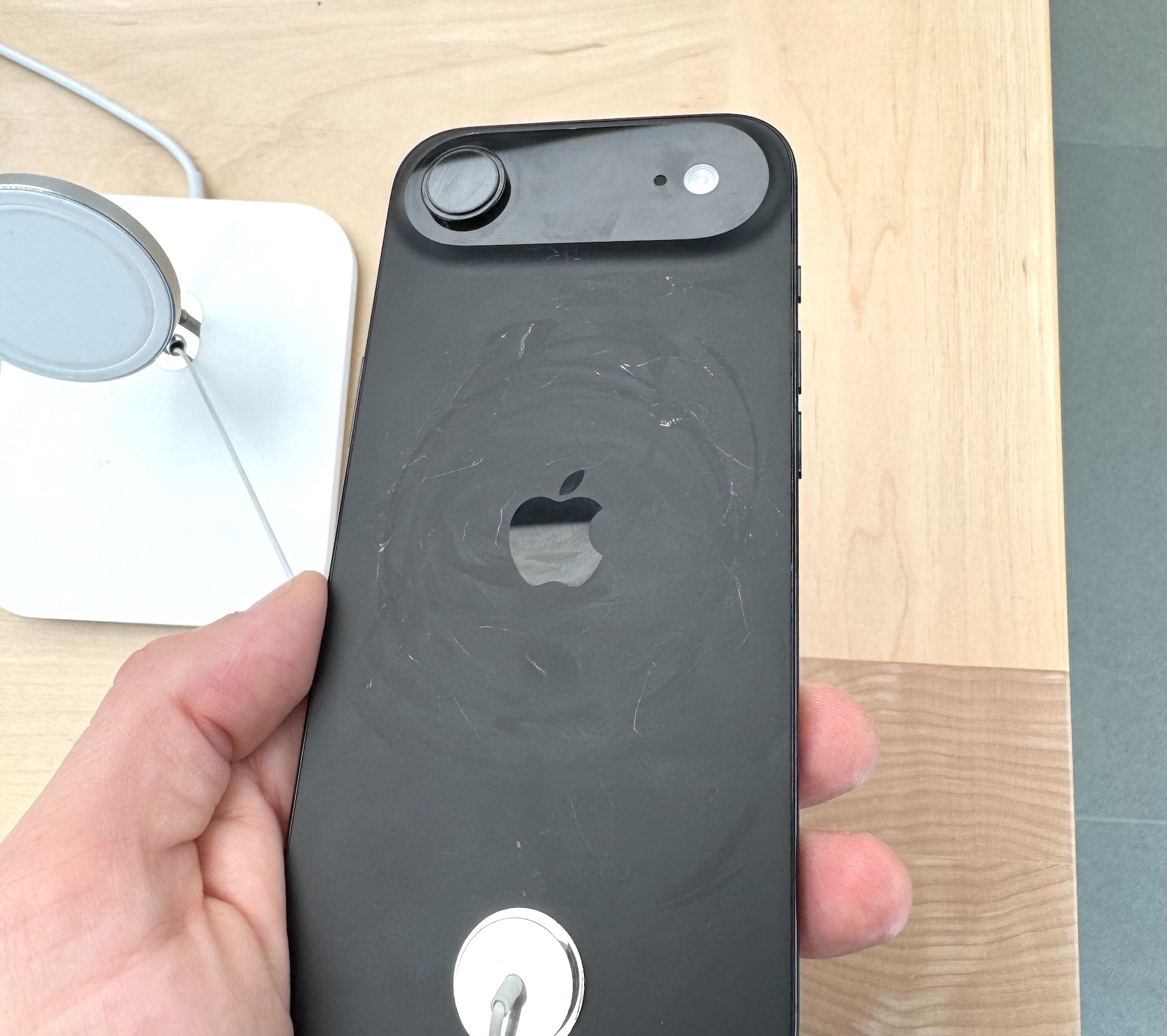
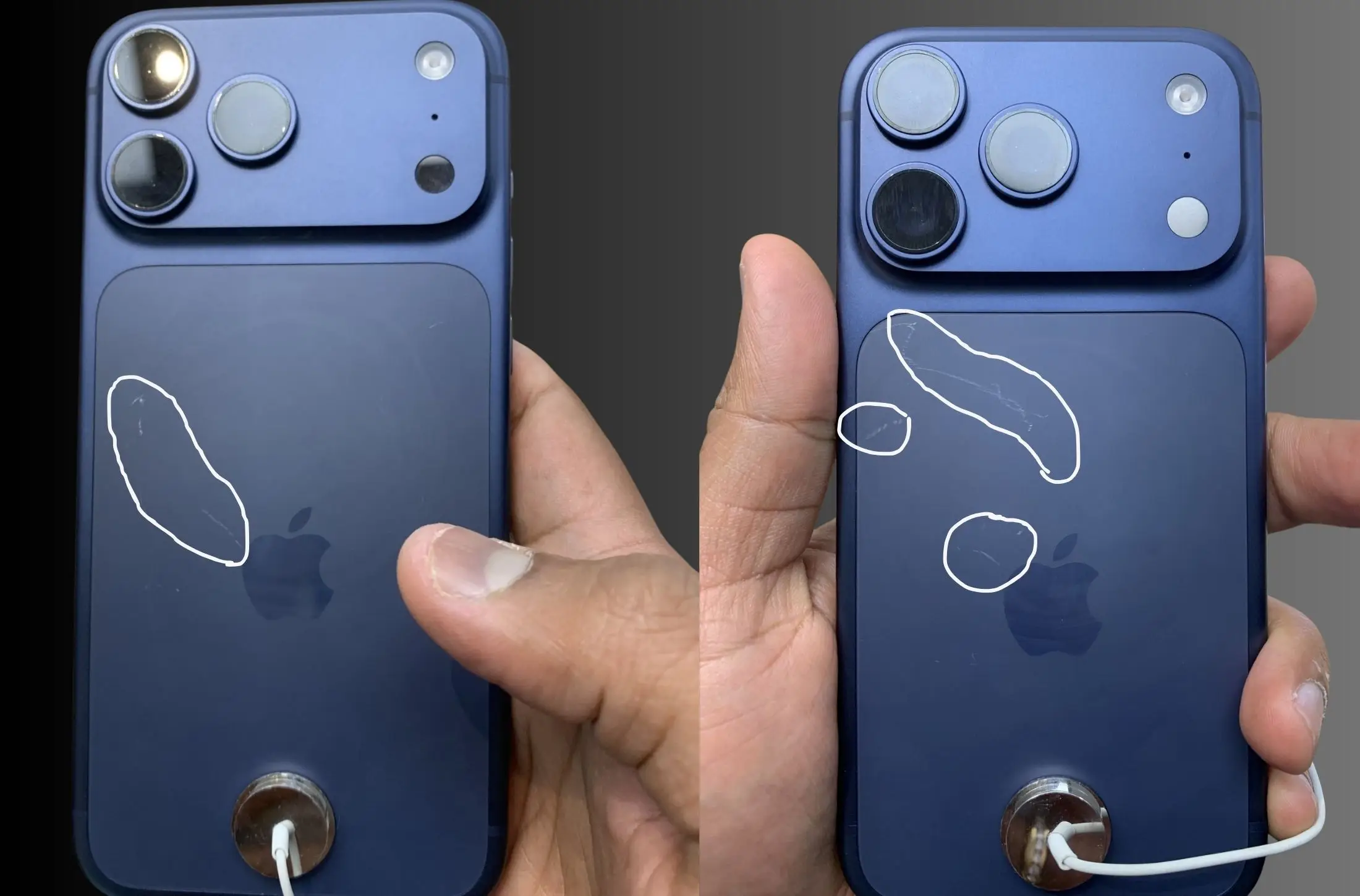
iPhone 17 Scratchgate scandal unfolded rapidly. The first alarm bells rang in China, where sales were among the first to begin. Users began posting photos on social media of their brand-new iPhone 17 Pro and Pro Max models with noticeable scratches and signs of wear that appeared literally within a few days or even hours of careful use. Models in dark shades, such as Deep Blue and Space Black, proved particularly vulnerable. The wave soon spread to other countries. The French publication Consomac reported similar problems found on display models at the Apple Store in Lyon [1]. Journalists and bloggers around the world began visiting their local Apple stores and were surprised to discover that the display smartphones, which should showcase the product at its best, were already covered with a web of fine scratches.
Social media exploded. The hashtag #Scratchgate immediately went viral, garnering thousands of angry posts, photos, and memes. Users compared the new the iPhone 17 scandal with Apple’s previous major failures, such as “Antennagate” (iPhone 4 signal issues) and “Bendgate” (the flexible iPhone 6 Plus body). The situation was exacerbated by the fact that Apple emphasized the new models’ increased durability and resistance to damage during the presentation. The promises and reality diverged too greatly, which caused such a fierce reaction from the community. People who had paid over a thousand dollars for a premium device felt cheated. The question “why the new iPhone gets scratched?” became the main topic on all technology forums.
The technical side of the problem: Why is the new iPhone so easy to scratch?
To understand the iPhone 17 scratch issue roots, we need to look under the hood, specifically at the materials and construction of its body. Ironically, what was presented as an innovation became the flagship’s Achilles’ heel.
Return to Aluminum: Apple’s Fatal Mistake?
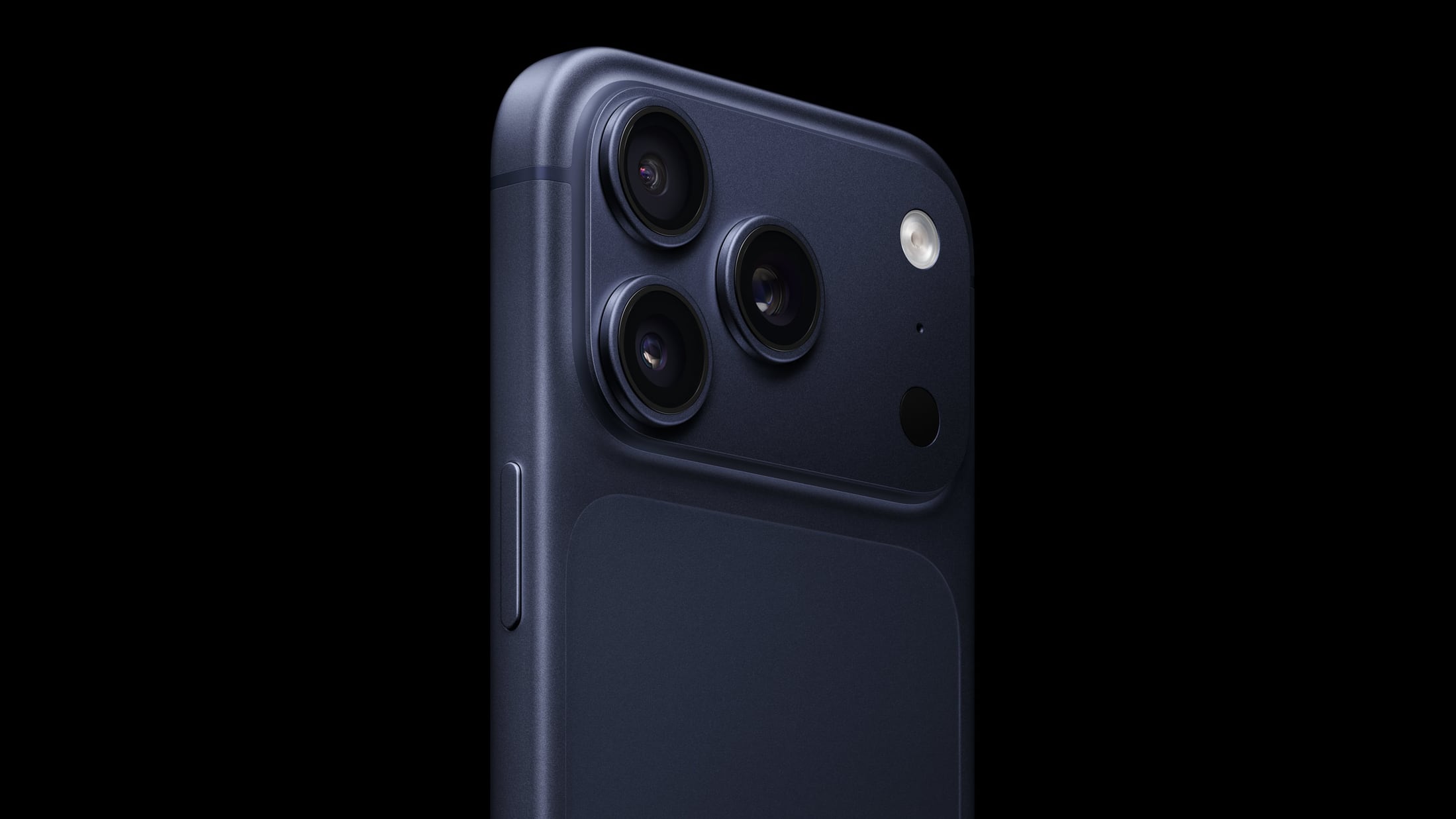
In the iPhone 17 Pro and Pro Max models, Apple abandoned the titanium used in the previous generation in favor of a 7000-series anodized aluminum unibody. Officially, this decision was justified by the desire to improve thermal conductivity. However, as practice showed, this compromise proved extremely susceptible to mechanical damage. The problem lies in the anodizing process itself. As experts explain, the anodized layer is less durable at the device’s corners and sharp edges, creating vulnerable spots [2].
As explained, the anodized aluminum layer on the iPhone 17 Pro and 17 Pro Max is “poorly bonded at the corners,” creating a vulnerable spot in the coating. As a result, the paint layer wears off easily, exposing the silver-colored metal underneath.
This situation is painfully reminiscent of the story of the black iPhone 5, which also suffered from dents and scratches quickly appearing along the edges. Dark colors such as Deep Blue, Cosmic Orange and Space Black make this damage especially noticeable, as the light-colored aluminum shows through beneath the dark coating. Thus, Apple’s pursuit of elegant design and better thermal management became a serious reputational problem for the company and forced users to hide their beautiful phone into the iPhone 17 case from the very first day of purchase.
Ceramic Shield: Protection That Doesn’t Protect?
Another Apple marketing gimmick is the ultra-strong Ceramic Shield glass. The company claims that the front panel of the new devices is 3 times more scratch-resistant and the back panel 4 times more crack-resistant than those of previous models. However, in its promotional materials, Apple tactfully remained silent about the scratch resistance of the back panel [1]. And, as it turned out, not without reason. A journalist from Tom’s Guide who received an iPhone 17 Pro for testing confirmed that scratches appear specifically on the Ceramic Shield-covered back panel, while the screen protected by Ceramic Shield 2 remains intact [3].
This suggests that the composition or application technology of the rear panel coating differs from that of the screen. The emphasis was likely placed on protection against drops and cracks, while scratch resistance took a back seat. As a result, users got a smartphone that is difficult to break but very easy to scratch. Particularly affected are scratches on the iPhone Air around the MagSafe wireless charging area, where contact with the charger and other accessories is constant.
Opinions of experts and bloggers
iPhone 17 Scratchgate the scandal did not go unnoticed by leading tech bloggers and publications, who rushed to conduct their own tests and investigations.
Durability tests: What did JerryRigEverything and Wylsacom reveal?
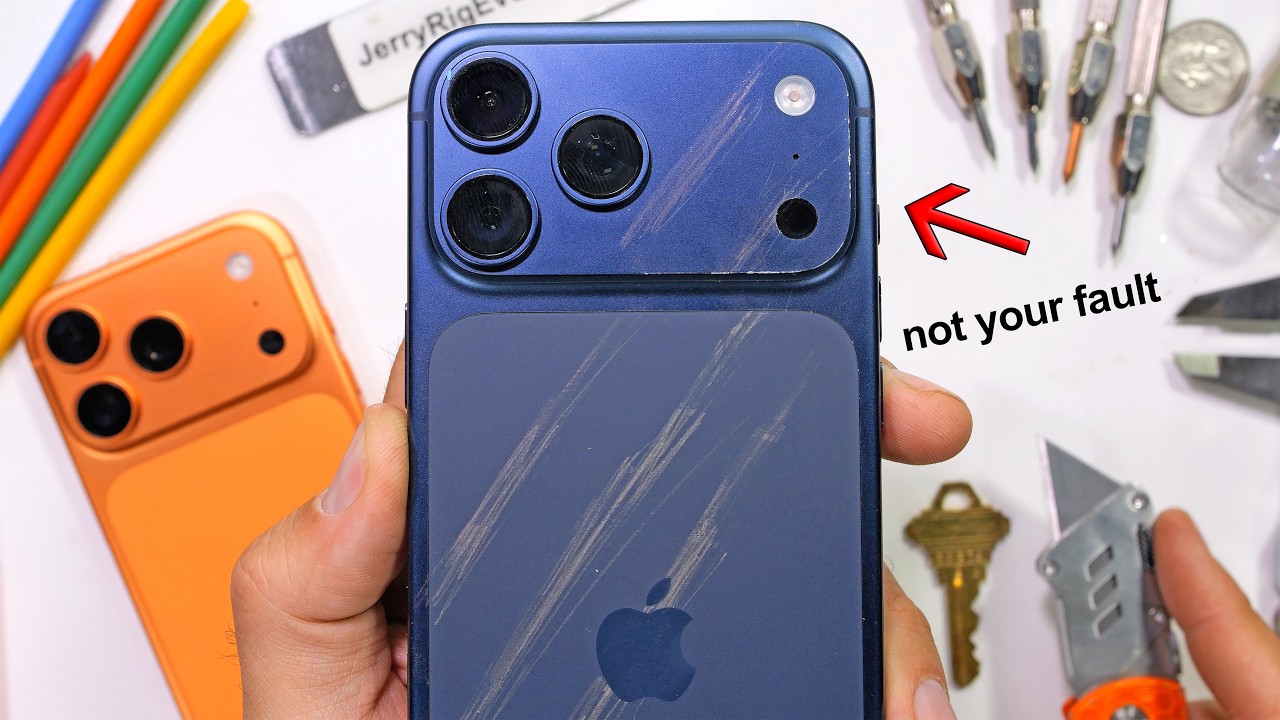
Zack Nelson, creator of the popular YouTube channel JerryRigEverything and known for his merciless durability tests, was one of the first to get his hands on the new flagship. His verdict was mixed. On the one hand, the screen did indeed demonstrate excellent scratch resistance, withstanding the impact of tools up to level 6 on the Mohs hardness scale. On the other hand, the blogger confirmed that the casing’s anodized aluminum, especially at the corners and around the camera module, scratches very easily [4]. Russian blogger Wylsacom reached similar conclusions, also noting the vulnerability of the edges and back panel [1]. These tests clearly showed that the problem is not something invented by angry users, but has a real technical basis.
Major technology publications conducted their own investigations. Journalists from Tom’s Guide, iXBT and Habr not only examined user complaints, but also inspected their own test models, confirming the existence of the problem [1, 3, 5].
“I took out my Cosmic Orange iPhone 17 Pro to check, and yes, there are fine scratches all over the back. To the same extent as in some of the photos I’ve seen? No. […] All the scratches on my iPhone 17 Pro are confined to the back, which is covered with Ceramic Shield. It is not as scratch-resistant as Ceramic Shield 2, which protects the screen,” writes John Velasco of Tom’s Guide [3].
Experts agree that iPhone 17 durability was sacrificed for the sake of design and other technical solutions. The return to aluminum, the peculiarities of anodization, and a less durable version of Ceramic Shield on the back panel—all these factors combined ultimately led to the iPhone 17 scandal damage.
Apple’s response: Is silence a sign of consent?
Persistent iPhone 17 Scratchgate against the backdrop of the scandal, Apple is maintaining a conspicuous silence. At the time of writing, no official statement, comment, or device replacement program has been issued. Such a strategy is nothing new for the Cupertino-based company. Apple often prefers to wait for the storm to pass without publicly acknowledging the problem, so as not to set a precedent for mass returns and lawsuits. Users who contact customer support receive standard responses stating that cosmetic damage is not covered by the warranty. It seems that the company believes the problem is not critical and does not affect the device’s functionality. However, ignoring the dissatisfaction of a loyal audience in this way could damage Apple’s reputation much more in the long run than Apple’s scandal itself.
How to protect your iPhone 17? Practical tips
Until Apple breaks its silence, those in trouble must help themselves. Considering that the iPhone 17 Pro Max gets scratched just as easily as its younger sibling, protecting the device becomes every owner’s top priority. The only reliable way to protect an expensive gadget from damage is to use a case. iPhone 17 case should be chosen in favor of models whose edges extend beyond the screen and camera module and whose inner lining is made of a soft material (such as microfiber) to prevent abrasion from the case itself. The use of protective films for the back panel may also be considered, although they may slightly detract from the device’s appearance and tactile feel. And, of course, basic care—not carrying the smartphone in the same pocket as keys or coins—will help preserve its original appearance for longer.
Conclusion: “Scratchgate” – a death sentence for the iPhone 17?
In conclusion, it can be said with certainty that iPhone 17 Scratchgate the problem is real and caused by a combination of Apple’s design and materials science miscalculations. The pursuit of a new design and improvements to some features led to others being weakened, namely a reduction in the scratch resistance of the casing. Is this a death sentence for the iPhone 17 series? Hardly. For most users, who use cases anyway, this problem will go unnoticed. But for those who value the aesthetics and tactile feel of a “bare” device, it has become a serious disappointment. The scandal once again showed that even giants like Apple make regrettable mistakes and that bold marketing claims do not always reflect reality. the iPhone 17 scandal impact on sales remains to be seen, but it is already clear that the engineers in Cupertino have work to do on the next generation of flagship devices.
To provide the best experiences, we use technologies like cookies to store and/or access device information. Consenting to these technologies will allow us to process data such as browsing behavior or unique IDs on this site. Not consenting or withdrawing consent, may adversely affect certain features and functions.
Functional
Always active
The technical storage or access is strictly necessary for the legitimate purpose of enabling the use of a specific service explicitly requested by the subscriber or user, or for the sole purpose of carrying out the transmission of a communication over an electronic communications network.
Preferences
The technical storage or access is necessary for the legitimate purpose of storing preferences that are not requested by the subscriber or user.
Statistics
The technical storage or access that is used exclusively for statistical purposes.The technical storage or access that is used exclusively for anonymous statistical purposes. Without a subpoena, voluntary compliance on the part of your Internet Service Provider, or additional records from a third party, information stored or retrieved for this purpose alone cannot usually be used to identify you.
Marketing
The technical storage or access is required to create user profiles to send advertising, or to track the user on a website or across several websites for similar marketing purposes.