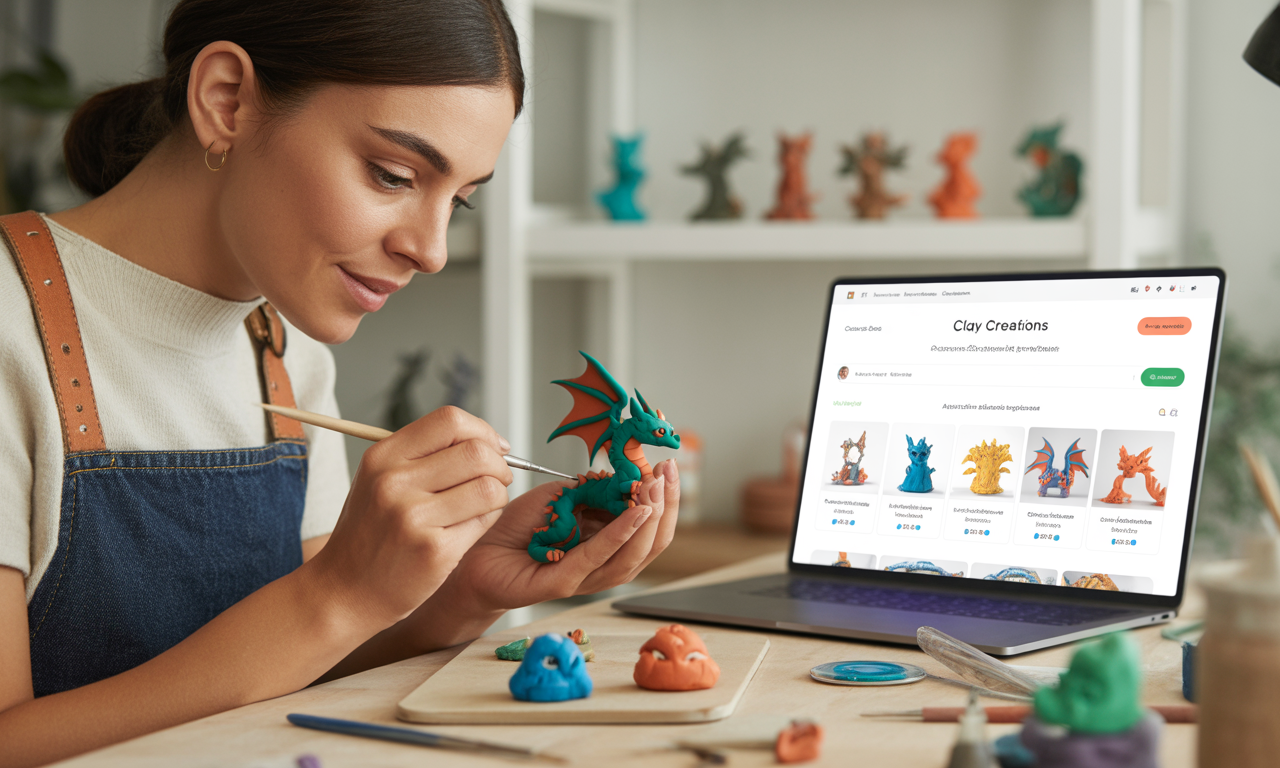
How to find a hobby you enjoy and turn it into a source of income
Many of us dream of being able to do work we truly enjoy. What if you could turn your passions and hobbies into a source of income? Not only is this possible, but it is even quite common in today's digital world. In this article, we look at how to find a hobby that suits you and how to successfully monetize it.
1. Finding the right hobby
Start with self-reflection
Before you can turn a hobby into a source of income, you need to find an activity that truly interests you. Ask yourself:
•What activities give me energy? Make note of the moments when you feel alive and inspired.
•What do I do voluntarily? Look at what you do in your free time when no one is forcing you.
•What do others praise me for? Others often notice our talents before we do.
•What activities make me lose track of time? If you feel that the hours fly by unnoticed, you are on the right track.
Popular hobbies that can become a source of income
Creative hobbies:
•Handicrafts (knitting, embroidery, jewelry)
•Photography and videography
•Writing and blogging
•Drawing and painting
•Music and singing
Technical hobbies:
•Programming and web design
•3D modelling and printing
•Electronics repair
•Furniture making
Service-based hobbies:
•Cooking and baking
•Gardening
•Fitness and training
•Language teaching
•Consulting
2. Assessing the potential of your hobby
Conducting market research
Before investing time and money, research the market:
•Is there demand? Search Google, Facebook, and Instagram to see whether people are looking for your service.
•Who are the competitors? See who already offers similar services and what their prices are.
•Who is the target audience? Define who your potential customers would be.
SWOT analysis
Conduct a SWOT analysis of your hobby:
Strengths:
•What are your strengths?
•What makes you special?
Weaknesses:
•What else do you need to learn?
•What resources are lacking?
Opportunities:
•Which market trends support you?
•Are there any new technologies that could be used?
Threats:
•Who are the main competitors?
•What external factors may have an impact?
3. First steps toward monetization
Start small
Do not try to build a large business right away. Start with small steps:
1.Testing – Offer your service to friends and family
2.Collecting feedback – Ask for honest opinions and suggestions for improvement
3.Pricing – Start with low prices to gain experience
4.Creating a portfolio – Document your work with photos and descriptions
Digital platforms
Use existing platforms:
Sales platforms:
•Etsy (handicrafts and creative work)
•Facebook Marketplace
•Osta.ee
•Soov.ee
Offering services:
•Fiverr
•Upwork
•Freelancer.ee
•Local Facebook groups
Teaching:
•Udemy
•Skillshare
•YouTube
•Local courses
4. Business development
Brand creation
Once you have acquired your first clients, it is time to think about your brand:
•Name and logo – Choose a memorable name and create a simple logo
•Social media – Create an Instagram, Facebook, or TikTok account
•Website – Even a simple one-page website helps build credibility
Marketing and sales
Free marketing:
•Social media posts
•Recommendations from friends and family
•Local events and fairs
•Cooperation with other entrepreneurs
Paid marketing:
•Facebook and Instagram ads
•Google Ads
•Local newspapers and radio stations
Customer retention
•High-quality service – Always be polite and professional
•Meeting deadlines – Complete the work on time
•Providing added value – Give customers more than they expect
•Regular communication – Keep customers informed about your new services and products
5. Financial aspects
Calculating costs
Take all costs into account:
•Materials and tools
•Marketing costs
•Taxes (sole proprietor status or OÜ)
•Insurance
•Training and development
Pricing
Finding the right price is an art:
•Covering costs – The price must cover all costs
•Market prices – Research your competitors' prices
•Value-based pricing – Assess the value of your work to the client
•Adding a profit margin – Don't forget the profit!
Taxation
There are several options in Estonia:
•FIE (füüsilisest isikust ettevõtja) – Easy to start, 20% income tax
•OÜ (osaühing) – More flexible, but with more bureaucracy
•Hobby income – Up to 1000 euros per year tax-free
6. Challenges and how to overcome them
Finding balance
When a hobby becomes work, the original joy may disappear. How to avoid this:
•Maintain your passion – Also do projects that you simply enjoy
•Take breaks – Do not burn yourself out
•Learn to say “no” – Do not accept every order
Staying motivated
•Set goals – Both short-term and long-term
•Celebrate progress – Recognize your achievements
•Keep learning – Continue developing your skills
•Find a community – Connect with other people who share similar interests
7. Successful examples from Estonia
Handicrafts and design
Many Estonians have turned their handicraft skills into successful business ideas. For example, knitting has evolved into a boutique-style clothing brand, or a pottery hobby into art sold in galleries.
Digital creation
Photographers who started by photographing their friends' weddings have grown into fully professional studios. Bloggers have become influential content creators and consultants.
Service
A passion for cooking has turned into catering services, gardening into landscape design, and a passion for fitness into personal training services.
Summary
Turning a hobby into a source of income is possible, but it requires patience, dedication, and strategic thinking. Start small, keep learning, and do not be afraid to experiment. The most important thing is to maintain your passion for what you do – then success will follow naturally.
Remember that success does not come overnight. Give yourself time to learn, grow, and develop. Every mistake is a lesson, and every small success is a step in the right direction.
Start today – take the first step towards your dream!
Do you have experience turning a hobby into a source of income? Share your stories and advice with others!
To provide the best experiences, we use technologies like cookies to store and/or access device information. Consenting to these technologies will allow us to process data such as browsing behavior or unique IDs on this site. Not consenting or withdrawing consent, may adversely affect certain features and functions.
Functional
Always active
The technical storage or access is strictly necessary for the legitimate purpose of enabling the use of a specific service explicitly requested by the subscriber or user, or for the sole purpose of carrying out the transmission of a communication over an electronic communications network.
Preferences
The technical storage or access is necessary for the legitimate purpose of storing preferences that are not requested by the subscriber or user.
Statistics
The technical storage or access that is used exclusively for statistical purposes.The technical storage or access that is used exclusively for anonymous statistical purposes. Without a subpoena, voluntary compliance on the part of your Internet Service Provider, or additional records from a third party, information stored or retrieved for this purpose alone cannot usually be used to identify you.
Marketing
The technical storage or access is required to create user profiles to send advertising, or to track the user on a website or across several websites for similar marketing purposes.