How to Recognize Phone Scammers in 2026: New Schemes Using Artificial Intelligence and Spoofed Bank Numbers
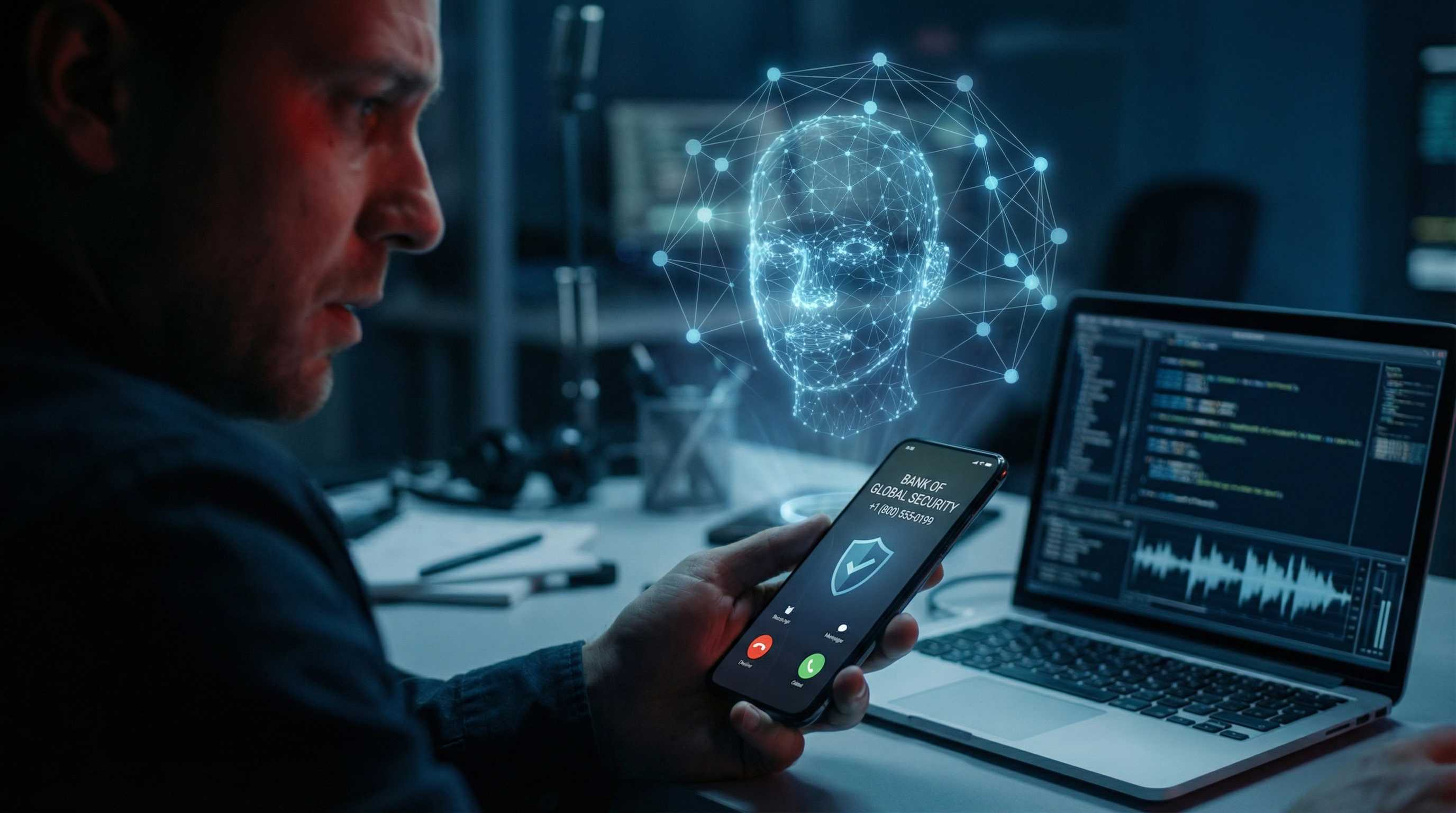
Cybersecurity has become one of society's main concerns in 2026. With the development of artificial intelligence (AI) technologies and the increasing sophistication of social manipulation methods, phone scams have reached an entirely new level. While just a few years ago scammers could be recognized by their accent, grammatical errors, or a suspicious phone number, these signs no longer work today. Criminals actively use neural networks to clone voices, spoof numbers (caller ID spoofing), and automate attacks. In this comprehensive article, we analyze the most prevalent scam schemes of 2026, paying particular attention to the situation in Estonia and the European Union, and provide effective advice on protecting your finances and personal data.
The evolution of phone scams: why the old rules no longer apply
In 2025–2026, the cyberthreat landscape has undergone radical changes. According to analytics agencies and Europol, incidents involving AI-powered fraud have increased by more than 1200% . Traditional data phishing (phishing) and voice phishing (vishing) have given way to high-tech attacks that leave the victim no time to think.
The main reason for this growth is the availability of artificial intelligence-based tools. Today, attackers do not need to have deep technical knowledge or spend hours researching a potential victim. Neural networks can analyze a person's social media profiles, generate a personalized conversation script, and even synthesize the voice of their relative or boss in just a few minutes.
Artificial intelligence in the service of criminals
The use of artificial intelligence in phone scams falls into several key areas:
1.Voice cloning (Voice Cloning). Modern algorithms need only three seconds of an audio recording (for example, from an Instagram or TikTok video) to create an exact copy of a person's voice with up to 85% similarity . Scammers use this technology to imitate calls from family members in distress or company executives demanding an urgent money transfer.
2.Automated scam agents (Scam agents). Instead of huge call centers with hundreds of “operators,” criminals now use AI robots. These bots are capable of holding meaningful conversations, responding to the victim's intonation, and applying psychological triggers to persuade the person to take the desired actions.
3.Overcoming the language barrier. This is especially important for countries such as Estonia. Previously, fraudsters often called from abroad and spoke the official language poorly or used Russian, which immediately aroused suspicion. Today, artificial intelligence makes it possible to generate flawless real-time speech in Estonian, eliminating this protective barrier .
Number Spoofing (Caller ID Spoofing): When “Your Bank” Calls
Üks ohtlikumaid taktikaid 2026. aastal on endiselt helistaja numbri võltsimine. Caller ID Spoofing is a technology that allows attackers to alter the information displayed on the victim's phone screen during an incoming call.
You may receive a call, and the official number of your bank, the police, or the tax authority will appear on the screen. This immediately lowers your guard because we are used to trusting technology.
How does the spoofed number scheme work?
Europol notes that number spoofing has become a “borderless business” (spoofing-as-a-service) . Criminal syndicates create entire networks, selling number spoofing services to other fraudsters.
The attack scenario usually looks like this:
1.The victim receives a call allegedly from the bank's security service (the bank's actual number is displayed on the screen).
2.The “employee” reports a suspicious transaction or an attempt to break into the account.
3.To cancel the transaction, the victim is asked to read out SMS codes, confirm a login via Smart-ID / Mobile-ID, or install a remote access application (such as AnyDesk).
4.Once they gain access, the fraudsters immediately transfer the money out, often using instant payment systems (SEPA Instant), which makes recovering the money virtually impossible.
To make such calls on a massive scale, criminals use SIM farms. Recent European police raids in Latvia, Austria, and Estonia led to the seizure of tens of thousands of SIM cards and devices that made it possible to create millions of fake accounts and make anonymous calls .
Situation in Estonia: record losses and new challenges
Estonia, as one of the world's most advanced digital nations, has come under serious attack. According to Riigi Infosüsteemi Amet (RIA), Estonian residents lost a record 29 million euros to scammers in 2025 — three times more than the year before .
Why has Estonia become an attractive target?
•High level of digitalization. The widespread use of Smart-ID and Mobile-ID makes the authorization and money transfer process very fast. Scammers actively exploit these systems, tricking victims into entering PIN1 and PIN2 codes.
•The disappearance of the language barrier. As already mentioned, artificial intelligence has enabled criminals to generate fluent Estonian speech. As a result, even those who previously recognized scammers easily by their accent have fallen victim.
•Instant payments. The use of instant payments means that stolen money leaves the country within seconds, ending up on cryptocurrency exchanges or in “money mule” accounts in other jurisdictions .
Real examples from Estonia
One of the most high-profile cases involved the large manufacturing company Hekotek, which lost over a million euros. The attack began with a call to the chief financial officer on behalf of Eesti Haigekassa. Using the information obtained, the scammers created a new Smart-ID account in the chief financial officer's name. This was followed by calls from the “bank” and the “police,” as a result of which the criminals gained remote access to the computer via AnyDesk and transferred 52 ülekannet summas 1,6 million euros within two hours .
Multi-stage schemes targeting individuals are also common. First, the person receives a call offering, for example, an electricity meter replacement and asking them to confirm the technician's visit via Smart-ID (by entering PIN1). Then the “police” call and say that the first call was from fraudsters and that the account must now be protected urgently by entering PIN2. As a result, the victim personally authorizes the transfer of their money .
European Union response: legislation and combating the threat
Probleemi ulatus on sundinud ELi regulaatoreid võtma kasutusele karme meetmeid. Telefonipettuste ja numbrite võltsimise kahju Euroopas hinnatakse sadadele miljonitele eurodele aastas .
PSD3 Directive and PSR Regulation
In response to the rise in authorised push payment fraud (APP fraud), the European Union is developing and implementing new rules for regulating payment services — PSD3 (Payment Services Directive 3) and PSR (Payment Services Regulation).
The main changes these documents introduce to combat scammers:
1.Liability Shift. If a bank has not implemented appropriate control mechanisms or allows an obviously fraudulent transaction to go through (especially in cases of number spoofing, where criminals impersonate bank employees), liability for reimbursing the money may fall on the financial institution .
2.Verification of Payee. Mandatory implementation of a system that checks whether the payee's name and account number (IBAN) match before a payment is sent in all EU countries. This makes life significantly more difficult for fraudsters using money mules' accounts.
3.Data exchange. Banks and payment systems are committing to sharing information about fraud patterns and suspicious accounts more actively in order to prevent cross-border crimes.
Europol's coordinated response
Europol has called for a coordinated European response to the problem of caller ID spoofing. Law enforcement agencies are calling for the implementation of uniform technical standards to trace fraudulent calls, verify legitimate numbers, and block deceptive traffic at the telecommunications operator level .
Some countries are already taking local measures. For example, in Finland and Estonia, telecommunications operators have begun implementing systems to filter calls coming from abroad and disguised as local numbers. However, without a unified standard (similar to the US STIR/SHAKEN), it is difficult to eradicate the problem completely.
How to recognize scammers in 2026: a security checklist
Given that criminals use cutting-edge technologies, the traditional advice “do not trust strangers” is no longer enough. Here is a detailed guide to protecting yourself against modern AI schemes and number spoofing.
1. Red flags: what should put you on alert
Fraud indicator
Description
Why it works
Urgency and pressure
The caller demands that you make a decision “right now”, threatening you with financial loss or criminal prosecution.
Fear switches off critical thinking. This is a classic social engineering technique.
Request to install software
A suggestion to download AnyDesk, TeamViewer, or other programs “to protect the device”.
These are remote access programs. By installing them, you give up control of your smartphone or computer.
Requests for codes and PINs
A demand to dictate an SMS code or the card's CVV code, or to enter PIN1/PIN2 in Smart-ID/Mobile-ID.
No genuine bank employee or police officer will ever ask for your PIN codes.
Transfer to a “safe account”
Persuasion to transfer money to a reserve or safe account in order to protect it.
Such accounts do not exist. They are accounts belonging to scammers or their accomplices.
Atypical behavior of an “acquaintance”
A call from a relative asking for money, but the voice sounds slightly unnatural or the person is unable to answer a personal question.
Using artificial intelligence to clone voices.
2. Technical protection methods
•Do not trust your phone's screen. Remember Caller ID Spoofing. If you receive a call from your bank's number and are told about problems, hang up. Dial the bank's number shown on the back of your bank card or on its official website yourself.
•Use security words. Agree on a secret word or phrase with your family members. If a “relative” calls you and asks for money, ask them to say that word. An AI clone will not be able to do this.
•Set limits. Set strict daily transfer limits in your online bank. This will not protect you from fraud completely, but it will minimize potential losses.
•Read Smart-ID notifications carefully. Before entering your PIN, always check exactly which action you are confirming (logging into the system or making a bank transfer) and whether the verification code displayed on your phone screen matches the code shown in your online bank.
3. Protecting the company (CEO Fraud)
In the corporate sector, where losses run into the millions, strict rules are necessary:
•Implementation of the “two-key” (Dual Approval) rule for all large financial transactions.
•Mandatory verification of changes to partners' bank details through alternative communication channels (if you receive an email about a change of account, you must call the partner back on a known number).
•Training employees in methods for combating social engineering and AI threats.
What should you do if you have fallen victim?
If you realize that you have shared information with scammers or transferred money to them, you must act immediately:
1.Contact the bank immediately. Report the incident and ask for your accounts and cards to be blocked and your latest transactions to be reversed. With instant payments, the chances are slim, but they do exist if you react within the first few minutes.
2.Block your authentication methods. If you entered PIN codes, contact customer support to block your Smart-ID or Mobile-ID account.
3.Remove the malware. If you installed a remote-access program, immediately disconnect the device from the internet and delete the application. Ideally, reset the device to factory settings.
4.Contact the police. File an official report. Even if the money cannot be recovered, the information will help law enforcement agencies track scammer networks (for example, identify SIM farms). In Estonia, incidents should also be reported to CERT-EE (a division of RIA).
Summary
1.telephone fraud is a high-tech industry that uses cutting-edge advances in artificial intelligence. Voice cloning, real-time speech generation, and number spoofing have made attacks incredibly convincing. Estonia and other EU countries are facing unprecedented growth in financial losses, requiring a comprehensive response from both regulators (through the implementation of the PSD3/PSR directives and coordination by Europol) and citizens themselves.
Your best defense is healthy skepticism, awareness of new scams, and adherence to basic digital hygiene. Remember: genuine banks and government agencies will never rush you, demand that you reveal PIN codes, or ask you to transfer money to “safe accounts”. Stay vigilant and warn your loved ones about new cybersecurity threats.
Freight transport, apartment demolition work, waste removal, shower enclosure dismantling, moving services and much more.
30.00€
Läänemere tee, Tallinn, Eesti
Reset password
Manage Consent
To provide the best experiences, we use technologies like cookies to store and/or access device information. Consenting to these technologies will allow us to process data such as browsing behavior or unique IDs on this site. Not consenting or withdrawing consent, may adversely affect certain features and functions.
Functional
Always active
The technical storage or access is strictly necessary for the legitimate purpose of enabling the use of a specific service explicitly requested by the subscriber or user, or for the sole purpose of carrying out the transmission of a communication over an electronic communications network.
Preferences
The technical storage or access is necessary for the legitimate purpose of storing preferences that are not requested by the subscriber or user.
Statistics
The technical storage or access that is used exclusively for statistical purposes.The technical storage or access that is used exclusively for anonymous statistical purposes. Without a subpoena, voluntary compliance on the part of your Internet Service Provider, or additional records from a third party, information stored or retrieved for this purpose alone cannot usually be used to identify you.
Marketing
The technical storage or access is required to create user profiles to send advertising, or to track the user on a website or across several websites for similar marketing purposes.