
Domestic violence in Estonia: how to recognize controlling behavior, protect children, and where to get help
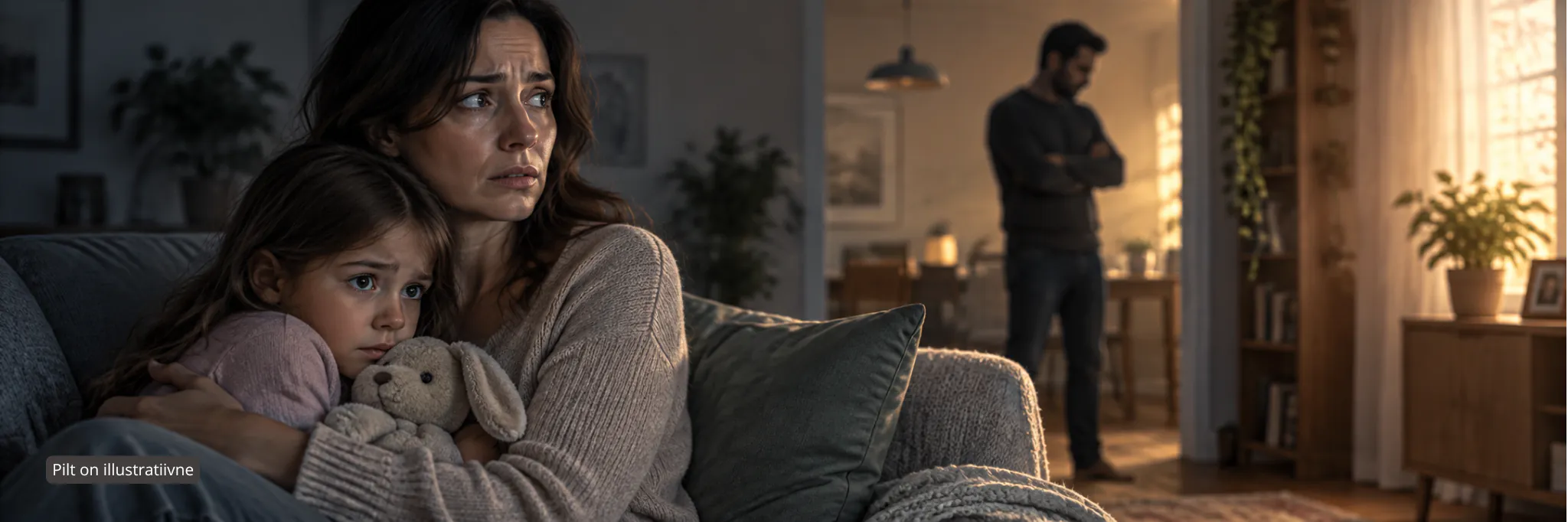
Intimate partner violence does not always begin with a blow. Sometimes the first sign is instead the atmosphere at home: children try not to make noise or cry, a partner thinks over an ordinary request several times before making it, and the whole family watches one person’s mood to avoid triggering another outburst of anger.
When family life increasingly starts operating on the principle “as long as they don’t get angry,” that is an important warning sign. The situation should be taken especially seriously when threats, intimidation, breaking things, financial control, physically restraining someone, pushing or hitting are also involved.
In Estonia, the Sotsiaalkindlustusamet defines intimate partner violence as psychological, physical, sexual and economic violence between people who are or have previously been in an intimate relationship or are related.
The World Health Organization also includes psychological violence and controlling behaviour, in addition to physical and sexual violence, in its definition of intimate partner violence. Read more: World Health Organization – Violence against women.
Conflict and intimate partner violence are not the same thing
Conflicts arise in every long-term relationship. People get irritated, sometimes say something a little sharply, and argue about raising children, money, household responsibilities or other issues. Therefore, one heated argument does not automatically mean intimate partner violence.
It is more important to look at the overall pattern of the relationship.
In an ordinary conflict, both people retain the right to be dissatisfied, disagree, express their feelings and stand up for their interests. A conversation may be unpleasant, but one person’s disagreement should not make the other fear for their safety.
In an abusive or controlling relationship pattern, however, a different dynamic gradually takes shape: one person has more freedom to shout, make demands, threaten or punish, while the others have to adjust their behaviour more and more to avoid another outburst of anger.
An important question to ask when assessing a relationship:
Can every family member safely say “no,” cry, feel sad, make a mistake, ask for help or disagree without fearing shouting, punishment, threats or humiliation?
When the whole family starts managing one person’s mood
A controlling relationship does not always become apparent through one major incident. Often, the way the whole family’s everyday life changes over time is what reveals the problem.
Children try not to make noise when an adult comes home. A partner puts off talking about money, problems at home or their own exhaustion because “now is not the right time.” An ordinary request is worded as cautiously as possible. A family member may start hiding purchases, meetings or minor mistakes, not because they are doing anything wrong, but because they fear the reaction.
Gradually, the family may stop focusing on solving problems and instead concentrate mainly on preventing the next outburst of anger.
Double standards are especially telling:
- children are not allowed to raise their voices, but the adult can shout;
- the partner is not allowed to be irritated, but has to put up with the other person’s anger;
- One person may make accusations, but responding with criticism is interpreted as disrespect;
- They demand explanations of what the money was spent on, but do not consider it necessary to justify their own expenses;
- Others are expected to control their emotions, but the whole family is actually expected to manage their emotional state.
The European Institute for Gender Equality uses the term coercive control, or coercive control, to describe a repeated pattern of behavior through which another person is intimidated, humiliated, isolated, or deprived of their independence. What matters is the repeated pattern, not whether physical violence is used in every episode. Source: European Institute for Gender Equality.
Why might someone be calm with other people but aggressive at home?
One of the most confusing things for loved ones is the stark difference in a person’s behavior at home and outside the home.
They may be polite to colleagues, patient with clients, helpful to friends, and generally give the impression of being a calm and pleasant person. At home, however, they may become demanding, critical, irritable, or aggressive.
This difference alone does not allow us to draw conclusions about a person’s motives, nor does it prove that every outburst of anger is premeditated. At the same time, it makes the explanation “they simply cannot control themselves at all” too easy.
If a person can regulate their behavior in situations where aggression would have professional or social consequences, but allows themselves significantly more latitude with their loved ones, then, in addition to difficulties with emotional self-regulation, the issue of power and control in the relationship must also be considered.
WHO names, among the risk factors for intimate partner violence, exposure to or witnessing violence in childhood, harmful alcohol use, attitudes that justify violence, a sense of entitlement, and highly controlling behavior in intimate relationships. These are risk factors, not a diagnosis of any particular person. Source: World Health Organization.
Constant criticism, tension, and the ensuing outburst
In some families, a prolonged period of tension precedes an aggressive episode. The person becomes increasingly critical, starts picking at little things, and demands perfect order, silence, or a certain mood from other family members.
The partner and children gradually begin to adapt. But it is impossible to completely prevent a child from crying, making mistakes, becoming tired, disagreeing, or having a bad day. Sooner or later, a new cause for dissatisfaction arises, and an outburst follows.
Afterward, the person may explain what happened by blaming other people’s behavior:
“You made me do it.”
“If you had kept quiet, nothing would have happened.”
“The children never listen.”
“You know what I’m like. Why do you provoke me?”
Here, it is important to distinguish between the cause of the irritation and responsibility for what happens next. Another person’s behavior may indeed cause anger. But the person who chooses to threaten someone, destroy property, physically restrain someone, or assault them remains responsible for that action.
Sometimes such relationships are described using the familiar “cycle of violence”: tension builds, a violent episode follows, and then comes reconciliation and a calmer period. This pattern can occur, but it is not a universal diagnostic rule. More important is to assess how often the behavior recurs, whether there is fear, the extent of the control, and how much other family members have to change their lives to prevent the next episode.
“You brought this on yourself”: how shifting responsibility makes the problem worse
After an aggressive incident, a person may acknowledge what happened while at the same time placing the blame on others: they shouted because the children were making noise; broke an object because their partner kept arguing; pushed someone because they were “provoked.”
Over time, this kind of logic can change the way the whole family thinks. Instead of asking, “Why did they behave that way?”, a new question arises:
“What do we have to do so they won’t get angry anymore?”
This is exactly where responsibility gradually shifts from the adult’s own behaviour to their loved ones’ ability to manage their emotional state.
The Social Insurance Board offers dedicated support to people who notice violent, excessively controlling, or otherwise harmful behavior toward their loved ones in themselves. You can read more about the service on the page “Supporting people in giving up violence”.
Why is breaking things a serious warning sign?
The statement “I didn’t hit anyone” does not make property destruction neutral behaviour.
Punching a wall, breaking a door, smashing a phone, overturning furniture or throwing an object near another person can be a form of intimidation. Even without direct physical contact, the family receives a very clear message about what the next reaction might be.
The WHO considers destroying objects and other intimidating behavior in the context of psychological intimate partner violence. Read more: WHO – Intimate partner violence.
Statistics Estonia’s relationship survey also addressed shouting and breaking things as behavior that intimidates or threatens a partner. According to the published data, 19% of the women who participated in the survey had experienced such behavior. Source: Statistics Estonia.
It is important to look not only at what was broken, but also at what happens afterward. If a partner and children become quieter, argue less, and try not to “provoke” the person, the intimidating effect is already present.


Economic violence: when money becomes a means of power and control
Financial arrangements are part of almost every family. A shared budget, reasonable limits on spending during a difficult period, or sharing financial obligations is not in itself violence.
The problem arises when money is used to restrict another adult’s independence.
For example, when one partner:
- takes away the other’s access to the family’s money;
- checks every purchase and constantly demands explanations;
- uses money as punishment for a disagreement;
- prevents the other person from working, studying, or becoming financially independent;
- incurs obligations or debts in the other person’s name;
- threatens to leave their partner or children without the money they need.
The Social Insurance Board also considers situations in which a person is made financially dependent, their bank account is controlled, or they are prevented from working or studying to be economic violence. Read more: Sotsiaalkindlustusamet.
The European Institute for Gender Equality also defines economic violence as behaviour that causes a person financial harm and limits their independence. Read more: EIGE.
Why might someone apologise, yet the violence continue?
A person who behaves violently may not be aggressive all the time. After an episode, they may feel shame, regret, and fear of losing their family, and sincerely promise that nothing like this will happen again.
Therefore, the sincerity of an apology alone does not show whether the behaviour has actually changed.
What matters more is what happens over the following weeks and months.
Possible signs of real change:
- the person acknowledges their specific actions without adding, “but you made me do it”;
- they do not blame their partner or children;
- threats and intimidation stop;
- other people’s boundaries begin to be respected;
- the person seeks professional help on their own;
- the change lasts over an extended period and is not limited to a few peaceful days after yet another argument.
In Estonia, anyone wishing to change their violent or excessively controlling behaviour can contact counsellors who support people in giving up violence by calling 660 6077 on weekdays at 10.00–16.00. Counselling is available in Estonian, Russian, and English. Read more: Sotsiaalkindlustusamet.
Where does this behaviour come from: childhood may explain it, but does not justify it
It is natural to ask where aggressive behaviour comes from. Especially when it is known that the person grew up with a dominant, demeaning, controlling, or aggressive parent.
A child learns about close relationships largely by observing the behaviour of the adults around them. If pressure, intimidation, and subjugation were consistently used to get what one wanted at home, that relationship model may later seem familiar and normal.
If the other parent was emotionally or practically less involved, the child may have had even fewer opportunities to see a different way of resolving conflicts.
At the same time, we should not draw too direct a conclusion. A domineering mother, an aggressive father, or a difficult childhood does not automatically “create” a future abuser.
Some people repeat a familiar childhood pattern as adults, while others consciously decide to choose a very different path in their relationships.
WHO points out that experiencing abuse in childhood and witnessing violence between family members can increase the risk of later health, relationship, and violence-related problems. However, this is an increased risk, not a predetermined fate. Source: WHO – Child maltreatment.
The past can help us understand how behavior develops, but responsibility belongs in the present. The adults around the child were responsible for what happened to them during childhood. They themselves are now responsible for how they treat their loved ones as adults.
Alcohol, stress, fatigue, and problems at work—causes or aggravating factors?
Alcohol, chronic stress, jealousy, financial problems, and lack of sleep can indeed increase irritability and reduce a person’s ability to regulate their behavior.
But they do not fully explain a pattern of abusive behavior in a relationship.
WHO identifies harmful alcohol use as one risk factor for intimate partner violence, but considers it alongside other factors, including attitudes that justify violence and controlling behavior.
In practice, this means that stopping alcohol use or reducing stress can remove one risk factor, but may not in itself change a person’s belief that they have the right to control, intimidate, or punish their loved ones.
How does intimate partner violence affect children?
One of the most dangerous misconceptions is the belief that a child has not suffered if they were not physically hit themselves.
A child does not live only amid conflicts between individual adults. They live within the entire emotional atmosphere of the home.
They hear shouting from another room, see broken things, notice the other parent’s fear, and understand which subjects are not safe to bring up. Some children learn to gauge an adult’s mood from their footsteps, the slamming of a door, or the tone of their voice.
UNICEF emphasizes that a child’s exposure to violence between adults can cause them serious harm even when the violence is not directed at the child. Source: UNICEF – Violence against Children at Home.
In Estonia, if you have a concern involving a child, you can contact Lasteabi by phone at 116 111. Children themselves, as well as parents, relatives, teachers, neighbors, and other adults concerned about a child’s well-being, can ask for help.
Why might a seemingly “perfect and obedient” child not feel safe?
A child living with constant unpredictability may become exceptionally cautious. They try not to get in the way, ask few questions, quickly learn to read adults’ moods, and try to prevent conflict before it even begins.
From the outside, this may look like good upbringing, maturity, or independence. In some cases, however, it is a way of adapting to an unsafe environment.
Other children may react in the opposite way: becoming irritable, aggressive, withdrawn, or beginning to have difficulties at school. Not all children react in the same way.
Possible short-term consequences
Children’s reactions depend on their age, the nature and duration of the violence, the presence of a safe adult, and many other factors. One child may show changes quickly, while another may only do so after some time.
- anxiety and constant vigilance;
- fear of being left alone or going home;
- sleep problems and nightmares;
- tearfulness, irritability or outbursts of anger;
- regression, or a return to behaviour characteristic of an earlier developmental stage;
- difficulties concentrating and learning;
- declining academic performance;
- stomach aches or headaches and other physical complaints with no obvious medical cause;
- withdrawal or loss of interest in activities they used to enjoy;
- feelings of guilt and the belief that the child caused the conflict;
- trying to be “perfect” so that the adult will not get angry;
- aggressive behaviour towards peers, sisters or brothers.
Important: none of these signs alone proves that intimate partner violence is occurring. The same changes can have many different causes. However, major or sudden changes in a child’s behaviour, especially when there is fear and serious conflict at home, require attention and, if necessary, professional assessment.
Possible long-term effects
If a child lives amid fear and unpredictability for a long time, this may affect their perception of themselves, trust, safety and close relationships.
Later, the following may occur:
- difficulties understanding their own emotions and needs;
- difficulty trusting others;
- the belief that love must be associated with control or fear;
- a tendency to tolerate humiliation or justify aggression;
- difficulty setting personal boundaries;
- increased anxiety or depressive states;
- problems related to low self-esteem;
- difficulties in learning, relationships or later in working life;
- a greater risk of repeating familiar unhealthy relationship patterns as an adult.
The last point should be understood correctly: a child who grows up amid intimate partner violence is not destined to become either a victim of violence or a perpetrator of violence in the future. The point is that there are increased risks, not a predetermined future.
A safe environment, an end to violence, the support of a stable and trustworthy adult, and timely professional help can significantly influence a child's further development.
WHO emphasizes that abuse and violence experienced in childhood can have a long-term impact on physical and mental health, education, relationships and social functioning. At the same time, prevention, early identification, protection and support help reduce subsequent harm. Source: World Health Organization.
Why do children often not speak up?
A child's silence does not mean that what is happening does not affect them.
A child may:
- fear the reaction of an aggressive adult;
- fear that the family will be broken up after they speak;
- love both parents and not want to cause trouble for anyone;
- think that they themselves are to blame for the conflict;
- consider what happens at home normal because they have nothing to compare it with;
- be unable to put what they have seen and experienced into words;
- fear that the situation will get even worse after they ask for help.
Therefore, asking “why didn’t you say anything sooner?” may only increase the child’s feelings of guilt.
It is more helpful to calmly tell the child that they are not responsible for adults’ behavior, they can talk about what frightens them, and adults are responsible for their safety.
Lasteabisse ei pea pöörduma ainult laps ise. Helistada võib lapsevanem, sugulane, õpetaja, naaber, tuttav või muu täiskasvanu, kes lapse heaolu pärast muretseb. Telefon 116 111 töötab ööpäev läbi. Loe lähemalt: Lasteabi.
How widespread is intimate partner violence in Estonia?
When assessing the scale of the problem, it is important to distinguish cases known to the police and the justice system from population surveys.
1149
Intimate partner violence-related crimes were recorded in Estonia in the first half of 2026. This was 2% less than in the same period of 2025.
Source: Justice Data Statistics – Crime statistics for the first half of 2026.
The number of recorded crimes does not, however, show the full extent of the problem, as it reflects only cases that have come to the attention of the justice system.
The Statistics Estonia relationship survey provides a broader picture. According to the published results, 41% of women had experienced violence in an intimate relationship at some point in their lives. 39% of women reported psychological violence, 13% physical violence accompanied by threats, and 9% sexual violence.
According to Statistics Estonia’s separately published data on men, 33% of men had experienced intimate partner violence: 32% had experienced psychological violence, 8% physical violence, and 1% sexual violence.
Sources: Statistics Estonia – women’s experiences and Statistics Estonia – men’s experiences.
These figures should not be directly compared. Crime statistics show crimes recorded during a specific period, while the Statistics Estonia survey covers people’s own accounts of their experiences over their lifetimes.
Intimate partner violence affects more than just women
International studies show that women experience a disproportionate amount of severe and sexual intimate partner violence. For this reason, international organizations treat violence against women as a distinct and important public health and human rights issue.
This does not mean, however, that a man cannot be a victim of intimate partner violence.
The Social Insurance Board emphasizes that people of different genders and ages can become victims of intimate partner violence. The Victim Support Crisis Helpline 116 006 is for anyone who needs help.
When should a situation be taken especially seriously?
Based on one article, it is not possible to assess a particular family’s individual risk level. However, some circumstances are serious enough to seek professional help before the next episode.
- threats to cause another person serious physical harm or kill them;
- strangulation or attempted strangulation;
- hitting, pushing, grabbing, or forcibly restraining;
- sexual coercion;
- threatening children or using them as a means of pressure;
- stalking or constant monitoring;
- damaging property and intimidation;
- taking away money, documents, a phone, or access to transportation;
- a situation in which a partner or children are genuinely afraid of the person’s reaction.
In immediate danger, call 112. The Emergency Response Centre stresses that you can call even if you are unsure whether the situation is serious enough to be an emergency—the emergency dispatcher can help assess the situation. Source: Häirekeskus.
A safety plan matters more than trying to “say the right thing”
If there are already threats or physical aggression in the relationship, trying to resolve a conflict during an outburst of anger may actually increase the danger.
In such a situation, the goal is not to win the argument or force the other person to admit they were wrong. The top priority is the safety of you and your children.
It is helpful to think ahead about:
- where you can go with the children if it is not safe to stay at home;
- where documents, medication, keys, and necessary belongings are kept;
- whether the person has independent access to a phone and money;
- which trusted person can be quickly informed about the danger;
- whether the children know the number 112 and a safe place to go if necessary;
- whether the phone, email, and accounts are secure if a partner monitors the devices.
The Social Insurance Board also recommends thinking through a possible safe place, essential belongings and money, and, if possible, drawing up a safety plan in a calm and safe environment. Read more: guidance from the Social Insurance Board.
Do you need to collect evidence?
A person does not have to prove that violence has occurred before contacting victim support or a women's support centre.
If someone is considering contacting the police or taking legal action later, messages, emails, photos of injuries or damaged items, medical records, and personal notes about incidents may be helpful.
Safety is more important than evidence, however.
If another person has access to the phone, computer, cloud services, or accounts, storing evidence there may increase the risk. If possible, materials should be kept in a safe place or with someone you trust.
Where can you get help with intimate partner violence in Estonia?
| Where to apply | Contact | When to contact |
|---|---|---|
| Emergency services | 112 | If life, health, or property is at risk and you need the police, an ambulance, or rescue services. |
| Victim Support Crisis Helpline | 116 006 | Ööpäevaringne abi füüsilise, vaimse, majandusliku või seksuaalse vägivalla korral. Nõu võib küsida ka lähedase inimese pärast. |
| Victim Support Crisis Helpline from abroad | +372 614 7393 | To contact Victim Support from outside Estonia. |
| Child Helpline | 116 111 | Ööpäevaringselt lastele ja täiskasvanutele, kui laps vajab abi või tema turvalisuse ja heaolu pärast on mure. |
| Child Helpline from abroad | +372 600 4434 | To contact the Child Helpline from abroad. |
| Emotional support helpline | 116 123 | Free emotional support every day at 10.00–24.00. |
| Support for giving up violent behavior | 660 6077 | For a person who wants to stop their violent or excessively controlling behavior. Mon–Fri at 10.00–16.00. |
Ohvriabi kriisitelefon 116 006 töötab tasuta ja ööpäev läbi. Abi saab eesti, vene ja inglise keeles ning soovi korral võib jääda anonüümseks. Kui telefoniga rääkimine ei ole turvaline või sobiv, saab kasutada ka veebivestlust aadressil Palunabi.ee.
Emotional support helpline 116 123 is available free of charge every day at 10.00–24.00.
Women's support centres across Estonia
Women's support centres operate in all counties of Estonia. The service is free of charge. The centres provide initial psychosocial support around the clock, help assess risks, offer psychological support and initial legal advice, and, if necessary, safe temporary accommodation for a woman and her children.
Contacting a support centre does not automatically mean filing a report with the police or being required to leave the relationship immediately. You can first discuss the situation with a specialist, assess the risks and learn about possible solutions.
| County | Phone |
|---|---|
| Harjumaa / Tallinn | 526 4697 5757 0911 |
| Ida-Virumaa | 5333 2627 |
| Jõgeva County | 5860 0170 |
| Järva County | 5813 3755 |
| Lääne- and Hiiumaa | 504 2300 5197 7170 |
| Lääne-Viru County | 56 297 745 |
| Põlva County | 5884 9494 |
| Pärnu County | 5398 1620 5365 0260 |
| Rapla County | 5400 5144 |
| Saaremaa | 5309 8919 |
| Tartu County | 5594 9496 |
| Valga County | 5303 2544 |
| Viljandi County | 5805 0535 |
| Võru County | 5308 6889 |
It is always a good idea to check the latest contact details on the Social Insurance Board’s women’s support centres page or Palunabi.ee.
Do I need to file a police report first?
No. You do not need to file a police report first or decide for yourself whether what happened constitutes a crime in order to speak with a Victim Support or women's support centre specialist.
You can first describe the situation to a specialist, get help assessing the risks and discuss possible next steps.
This is especially important for someone who is still unsure whether what is happening is “serious enough.” You can call 116 006 before the next violent episode.
Can a person who behaves violently really change?
Yes. Aggressive and controlling behavior does not have to be unchangeable.
But change requires more than regret after yet another outburst of anger.
The first important step is to stop blaming your partner, children, alcohol, work problems or a difficult childhood.
The next step is to start actually changing your behaviour and, if necessary, to seek professional help.
Support for giving up violent behavior
Phone: 660 6077
Monday–Friday at 10.00–16.00
Counselling in Estonian, Russian and English.
The Social Insurance Board service is intended for adults who want to take responsibility for their behaviour and work to ensure that violence does not recur. Read more: support for giving up violence.
“But otherwise they’re a good person”
Intimate partner violence would be much easier to notice if the person behaving violently were aggressive all the time.
In reality, the same person may do well at work, help friends, play with the children, be gentle and attentive, and at the same time threaten, humiliate, control or use physical force during conflicts.
That is why the question “are they a good or bad person?” is not very helpful in assessing whether a relationship is safe.
The following questions provide more information:
- whether it is possible to disagree safely when this person is around;
- whether a child is allowed to cry;
- whether a partner is allowed to be tired or dissatisfied;
- whether it is possible to say “no”;
- whether a partner can use their own money;
- whether it is possible to keep in touch with friends and relatives;
- whether it is possible to make mistakes without fearing shouting or punishment;
- whether the whole family has to constantly change their behaviour to manage one adult’s mood.
Home should not become a system designed to manage one person’s anger
The most serious change may happen very slowly.
At first, the family tries to resolve a specific conflict. Then they begin to prevent conflicts. Next, they try to avoid upsetting one person. At some point, much of family life may begin to revolve around one question: “What can we do so they don’t get angry today?”
Then responsibility has been quietly reversed. Instead of an adult taking responsibility for their own reactions, their partner and children begin to see it as their job to manage the adult’s emotional state.
A difficult childhood may help explain how certain behavioural patterns develop. Alcohol can increase the risk. Stress can intensify irritability. Harmful family patterns can indeed be passed down from one generation to the next.
But none of these factors make threats, humiliation, financial control or physical violence a normal way to interact with loved ones.
If you need help now
Immediate danger – 112
Victim Support Crisis Helpline – 116 006
If the situation involves a child – 116 111
Help for someone who wants to stop their own violent behaviour – 660 6077
Do you offer psychological support or help people recover from difficult relationships?
If you are a psychologist, family counsellor, psychotherapist, specialist working with trauma, support group organiser, or offer recovery programmes, parenting counselling or other services that support mental well-being, you can promote your services on Easyfind.
Describe as specifically as possible in your listing the situations in which you can help: the effects of intimate partner violence, anxiety, rebuilding personal boundaries, parent-child relationships, family conflicts, emotional burnout, post-divorce crisis, grief, self-esteem or other issues.
Include information about your education and experience, languages used in counselling, work format, location, availability of online counselling, fees, programme duration and registration method. The more clearly you describe whom you help and in what situations, the easier it is for someone seeking help to find the right specialist.
You can add a detailed service description, photos, video, a PDF file containing your programme, price list or other necessary information, an introduction to yourself or your company, and convenient contact options to your Easyfind listing. This way, people can find the key information in one place and do not have to search different websites and social media accounts to find a suitable specialist.
Help people find professional support exactly when they need it most.
These articles may also be of interest
How to reduce stress during the day: a practical guide
Practical tips for reducing stress, recognizing your own needs, and setting healthier boundaries in everyday life.
Emotional burnout: how to recognize and prevent it
What signs may indicate long-term emotional exhaustion, and when is it worth seeking professional support?
How to support a child starting school – advice from teachers
How to recognize a child's anxiety, fatigue, and changes in behavior, and offer them reassurance in a new situation.
Child support in Estonia in 2026: who is entitled to it, how to calculate it, and how to claim it?
A practical overview of child maintenance, parents' responsibilities, maintenance allowance, and the options available when parents live separately.
Frequently asked questions
Is shouting domestic violence?
Raising your voice is not automatically domestic violence every time. The context of the situation, how often the behavior occurs, the content of any threats, whether fear is present, and whether shouting is used to intimidate and control another person are all important.
Can breaking things be violence even when no one is hit?
Yes, breaking property during a conflict can be a form of intimidation and psychological violence, especially if the other person then begins to fear possible physical aggression or changes their behavior out of fear.
Can I also call 116 006 if I'm not sure whether what is happening is violence?
Yes. A person does not have to make a legal assessment of what happened before asking for help. They can first discuss the situation with a victim support specialist.
What should I do if a child constantly hears their parents arguing, but is not hit themselves?
Violence between adults can affect a child even without direct physical violence against the child. If there is concern for the child's emotional or physical well-being, an adult can contact Lasteabi at 116 111.
Does someone have to leave an abusive partner immediately?
A person makes their own decisions about their relationship and future life. However, if there are threats or physical violence in the relationship, it is advisable to have a specialist assess the risks and prepare a safety plan in case the situation escalates.
Official and international sources
Social Insurance Board – domestic violence
Social Insurance Board – women's support centres
Palunabi – victim support and online counselling
Emergency Response Centre – 112
Justiitsandmete statistika – crime statistics for the first half of 2026
Statistics Estonia – women's experiences of intimate partner violence
Statistics Estonia – men's experiences of intimate partner violence
World Health Organization – Violence against women
World Health Organization – Child maltreatment
UNICEF – Violence against Children at Home
The article is for informational purposes and is not intended to provide a specific person with a psychological or psychiatric diagnosis. To assess individual danger and safety risks, contact victim support services, the police, child protection services, or a healthcare professional.
Contact details and key facts have been verified against official sources on 21 September 2026.
Current offers on Easyfind
How much will your job cost?
Choose a service and its scope to get an estimated price.