
← BACK
Meta’s Vision of the Future: Revolutionary AI Glasses Priced at 499 Dollars
25 September 2025
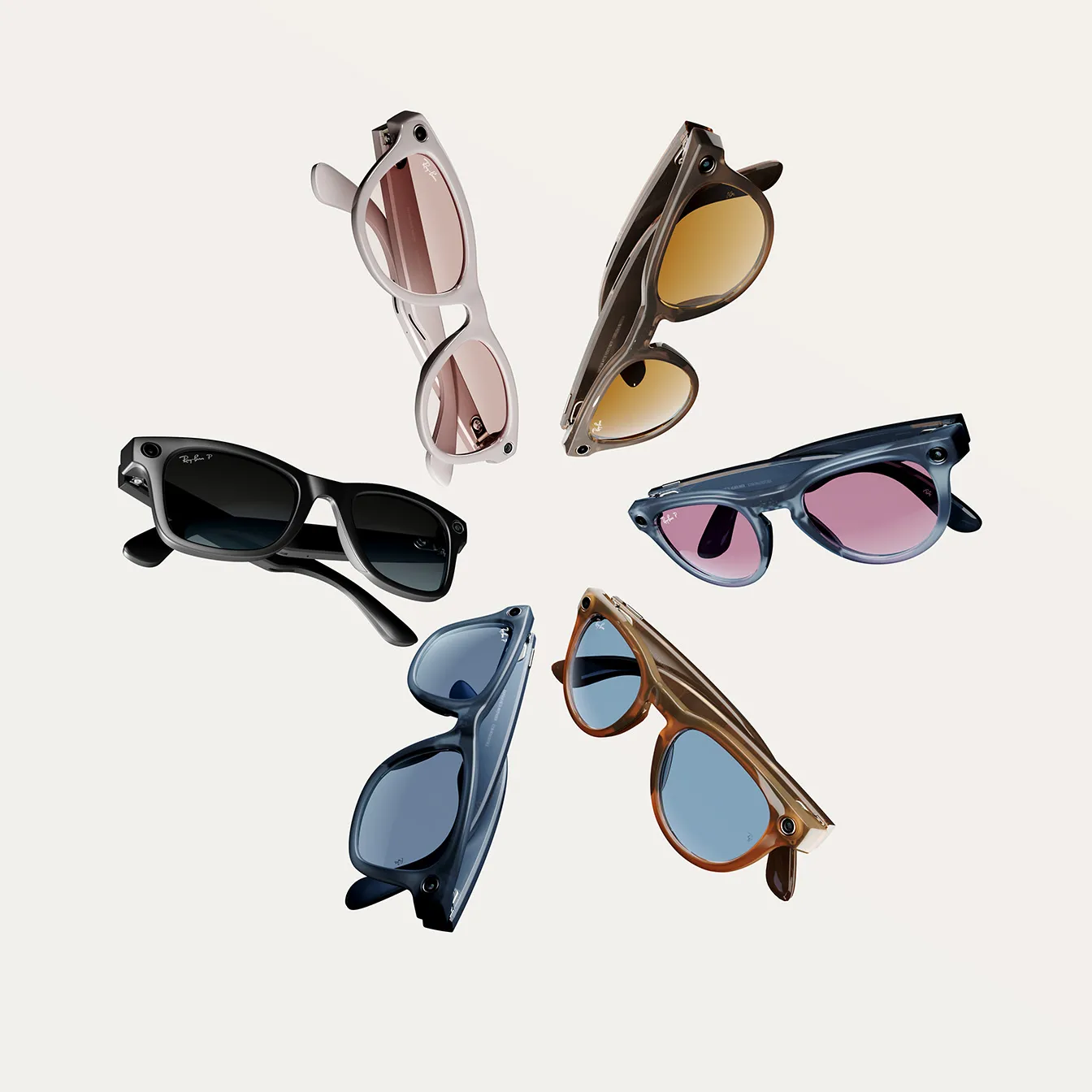
The technology world is buzzing once again. At Meta's annual Connect 2025 conference, three new artificial intelligence (AI)-powered glasses models were unveiled, promising to transform our everyday interactions with technology and the world around us. The sporty models with a $499 price tag attracted the most attention: Oakley Meta Vanguard glasses and the revolutionary flagship Meta Ray-Ban Display, which introduces an in-lens display to the mass market for the first time. This move puts Meta in direct competition with Apple’s much-discussed Vision Pro headset, but does so with a radically different approach: through stylish, everyday wearable technology accessible to the masses. This article takes a deep dive into the world of Meta's new AI glasses, analysing their technological innovations, features, market position and potential impact on our future. We explore whether this is merely another gadget or a true revolution that brings personal superintelligence to everyone.
A New Era in Wearable Devices: Meta's Three New AI Glasses Models
Meta launched not one, but three new devices, each aimed at a different user profile and need. This strategy clearly demonstrates Meta's ambition to turn AI glasses from a niche product into an everyday accessory. Unlike previous attempts, which have remained clunky and socially awkward, Meta's new glasses were designed in collaboration with the iconic eyewear brands Ray-Ban and Oakley, ensuring a stylish appearance and comfort.
Ray-Ban Meta (Gen 2): Evolution, Not Revolution
The most affordable model aimed at a broader audience is Ray-Ban Meta (Gen 2), with prices starting at 379 dollars. It is an evolution of the Ray-Ban Stories glasses already on the market. Although this model lacks the revolutionary display, significant improvements have been made. Meta promises up to twice the battery life, which has been one of the biggest stumbling blocks for previous smart glasses. The camera has also been upgraded, allowing high-quality 3K video recording. This model is ideal for those who want to explore the world of smart glasses without making a large investment, offering hands-free photo and video capture and integrating the functionality of the Meta AI voice assistant.
Oakley Meta Vanguard: Artificial Intelligence Meets Sports
Just Oakley Meta Vanguard model is the one with a $499 price tag and is aimed at people with active lifestyles. Created in collaboration with Oakley, the design is sporty, durable, and weather-resistant, with an IP67 rating, meaning the glasses are dustproof and water-resistant. The battery lasts up to nine hours with mixed use, which is enough even for a longer hike or workout. The glasses have a camera with a 122-degree field of view and 3K video recording with image stabilization. The most important innovation, however, is integration with popular sports apps such as Garmin and Strava. This allows athletes to receive real-time data about their workout directly through the glasses without having to look at a watch or phone. This is a significant step toward integrating health tracking into smart glasses.
Meta Ray-Ban Display: A Window into the Future, Today
The true star of the conference was undoubtedly Meta Ray-Ban Display, whose price including Meta Neural Band with a wristband costs 799 dollars. This is Meta's first pair of AI glasses with a high-resolution monocular in-lens display. It is a technological breakthrough that sets Meta's glasses apart from all previous attempts. The display is large enough to read messages or watch short video clips, yet discreetly offset so as not to obstruct the user's field of view. When not in use, the display becomes invisible. This solves one of the biggest problems that has hindered the widespread adoption of augmented reality (AR) glasses—social acceptability. The Meta Ray-Ban Display glasses look like ordinary stylish glasses, not a headset from a science-fiction film.
Technological Deep Dive: What's Inside the Meta Ray-Ban Display Glasses?
The true magic of the Meta Ray-Ban Display glasses lies in their technology, concealed within a classic Ray-Ban design. This is not merely a pair of glasses with a camera, but a complex system combining cutting-edge display technology, a revolutionary control method, and powerful artificial intelligence.
A Revolutionary Display: More Than Just an Image Before Your Eyes
The most important upgrade is undoubtedly the high-resolution monocular display integrated directly into the lens. Meta has achieved an impressive pixel density of 42 pixels per degree (PPD), which exceeds the resolution of even many consumer-oriented VR headsets. This ensures a sharp and clear image. The display brightness is up to 5000 nits, which means it is convenient to use both indoors and in bright sunlight.
According to Meta's design philosophy, the goal is not to immerse the user in a virtual world, but to provide a discreet and functional assistant. The display is positioned at the edge of the field of view and activates only when needed, showing, for example, incoming messages, navigation instructions, or real-time translations. After a few seconds, it switches off again, allowing the user to focus on the surrounding world without distraction. This is a fundamental difference compared with Apple Vision Pro, which isolates the user from the outside world.
Meta Neural Band: Control Through the Power of Thought?
The second revolutionary component is Meta Neural Band – a wristband that completely changes how we interact with devices. This is no ordinary smartwatch. The wristband uses surface electromyography (sEMG) technology to read the electrical signals that the brain sends to the hand muscles. This allows the glasses to be controlled with subtle, almost imperceptible finger movements. The user can scroll through menus, select objects, and even type messages without having to touch the glasses or use voice commands. This is a huge step towards interacting with technology in a more intuitive and discreet way. Meta has been developing this technology since 2021, and Neural Band is the first commercial product resulting from this research. However, the potential is much broader—in the future, similar technology could be used to control any device, also offering new possibilities for people with mobility impairments.
Llama AI Integration: Personal Superintelligence at Your Service
All this hardware is brought to life by Meta's powerful Llama AI. The glasses are equipped with the Meta AI assistant, which is always ready to help. The concept is simple yet powerful: “AI sees what you see and hears what you hear.” This enables an entirely new level of context-aware assistance. For example, you can look at a building and ask about its history, or look at a menu in a foreign language and have AI translate it in real time.
Real-Time Translation is one of the most impressive features. The glasses can translate both speech and text, displaying the translation directly in your field of view. This eliminates language barriers when traveling or communicating with foreigners. Augmented reality (AR) layers make it possible to display useful information directly on real-world objects. This could include navigation directions on streets, product information in a store, or interactive exhibits in a museum. Meta is betting on the glasses becoming your personal superintelligence, helping you navigate and interact with the world more effectively.
Health Monitoring and Privacy: What Does Meta Promise?
For smart devices that are so closely integrated into our lives, health monitoring and privacy are paramount. Meta has tried to address these aspects in its new glasses, but the approach is somewhat cautious and fragmented. Unlike smartwatches, which are clearly positioned as health devices, Meta AI glasses are not (yet) fully fledged health trackers. Nevertheless, there are signs pointing to future plans.
The clearest step in this direction is Oakley Meta Vanguard model, which offers integration with With Garmin and Strava. This allows athletes to receive real-time data about their performance, such as speed and distance, directly on the glasses' display. This is undoubtedly a useful feature, but it relies on external devices and apps rather than the glasses' own sensors. The glasses themselves do not measure heart rate, blood oxygen levels, or other vital signs. Although Neural Band uses sEMG technology to read muscle signals, Meta has not (yet) announced plans to use this technology more broadly for health monitoring, such as tracking muscle fatigue or neurological conditions, although the potential exists.
Privacy is another area where Meta has tried to learn from past mistakes. Awareness that the glasses contain a camera has sparked considerable public reaction. To alleviate this, all Meta glasses have a visible LED light, which always lights up when the camera is recording an image or video. This signals to people nearby that they may be recorded. In addition, Meta emphasizes that Neural Band involves all raw sEMG data processing taking place directly on the device. Only recognized commands, such as “click,” are sent to the glasses. This is an important step in protecting user data, as sensitive biometric data is not sent to the cloud or Meta servers.
However, questions remain about the broader use of Meta AI. Since the AI “sees and hears” everything the user does, the scope of data collection and use remains an issue that requires clear and transparent communication from Meta. Users need to be certain that their personal conversations and visual world remain private.
Market Analysis: How Does Meta Stack Up Against Its Competitors?
Meta’s entry into the market for advanced AI glasses is not happening in a vacuum. Although the market is young, clear leaders and different approaches are already emerging. Meta’s strategy is to attack the market from several directions, offering products at different price points, but the main battle will undoubtedly be with Apple.
Meta vs. Apple Vision Pro: Glasses vs. Headset
Although both Meta Ray-Ban Display and Apple Vision Pro broadly fall into the “wearable technology” category, their philosophies and target audiences are completely different. Comparing these two products highlights two opposing visions of the future of augmented reality.
| Function | Meta Ray-Ban Display | Apple Vision Pro |
| Price | $799 (with Neural Band) | Starting at $3,499 |
| Form | Stylish, lightweight glasses (69g) | Large, enclosed headset |
| Display | Monocular, 42 PPD, 5000 nits | Two micro-OLED displays, 23 million pixels |
| Use case | Everyday assistant, notifications, AR overlays | Immersive work, entertainment, VR |
| Social aspect | Designed to be socially acceptable | Isolates the user from the outside world |
| Controls | Neural Band (sEMG), voice commands | Eye, hand, and voice tracking |
| Target audience | General consumer, fashion-conscious person | Professionals, developers, early adopters |
As the table shows, the main difference lies in price and form factor. Meta focuses on accessibility and social acceptance. Their goal is to create a device that people want to wear every day as part of one's style. Apple’s Vision Pro, however, is an uncompromising “spatial computer” that offers an unrivalled visual experience, but does so at the cost of a high price and social isolation. Meta’s strategy appears to be more sustainable in the long term for capturing the mass market. They are building an ecosystem and familiarising users with the concept of AI glasses while the technology evolves and becomes even more capable.
Other Players in the Smart Glasses Market
Besides Apple, there are other players on the market, although Meta is currently in a clearly dominant position. The market can be broadly divided into three categories:
1.Glasses with an AR display: Companies such as Xreal and RayNeo offer glasses that function primarily as a portable display, mirroring the image from a smartphone or computer. Their prices are in a similar range to Meta Vanguard glasses, but they lack Meta's deep AI integration and autonomous capabilities.
2.Glasses with a voice assistant: Amazon Echo Frames are a good example of glasses that focus primarily on providing a voice assistant (Alexa) without a visual interface. They are direct competitors to Meta Gen 2 glasses.
3.China's rising stars: Several Chinese companies, such as INMO and Rokid, are also developing their own AR glasses, often offering competitive prices, but still lagging behind in brand recognition and software ecosystem.
Meta's strategic advantage lies in several factors. First, the partnership with Ray-Ban and Oakley gives them instant credibility and access to the fashion-conscious market. Second, their substantial investment in Llama AI in development and Neural Band into similar innovative control methods creates a unique value proposition. Third, Meta controls a large share of the social media landscape, giving it a powerful platform for integrating and marketing the glasses' functionality.
Conclusion: Are Meta AI Glasses the Future We Have Been Waiting For?
The Meta Connect 2025 event undoubtedly marks an important moment in the history of wearable technology. The new AI glasses, especially Meta Ray-Ban Display and Oakley Meta Vanguard, Meta has made a bold statement by bringing it to market. They are not merely offering another technological gadget, but a well-considered vision of a future where technology is invisibly and stylishly integrated into our everyday lives.
The key conclusions are clear. First, Meta has resolved the two biggest obstacles that have so far hindered the widespread adoption of smart glasses: form factor and social acceptability. The partnership with Ray-Ban and Oakley ensures that these are devices people will actually want to wear. Secondly, Neural Band has created a revolutionary and intuitive way to control devices, which may transform how we interact with all technology in the future. Thirdly, Llama AI integration transforms the glasses from merely a screen and camera into a personal assistant that provides real value through real-time translation, navigation, and context-based information.
In competing with Apple Vision Pro, Meta has clearly chosen a different path. Instead of offering an extremely expensive, all-encompassing “spatial computer”, Meta focuses on accessibility and everyday ease of use. The 799-dollar price for Meta Ray-Ban Display (and 499-dollar price for the Vanguard model) is an aggressive move that makes this technology accessible to a much wider audience than Apple’s nearly 3500-dollar headset.
Naturally, there are still unanswered questions, particularly concerning privacy and the use of data in the long term. However, Meta has taken the first important steps to alleviate these concerns. Are these glasses the future we have been waiting for? The signs indicate that yes, this is the beginning of something big. This is a future that is no longer a distant dream, but a stylish and functional reality that can be purchased today. What do you think? Share your thoughts in the comments!
References
1.Meta Connect 2025 Keynote Blog: https://www.meta.com/en-gb/blog/connect-2025-day-one-keynote-ai-glasses-ray-ban-display-neural-band-metaverse-news/
2.Introducing Meta Ray-Ban Display Blog: https://www.meta.com/blog/meta-ray-ban-display-ai-glasses-connect-2025/
3.Apple Vision Pro Technical Specifications: https://www.apple.com/apple-vision-pro/specs/