A Revolution in Orthopedics: The “Bone Repair Gun” Created by Korean Scientists Redefines Fracture Treatment
29 September 2025
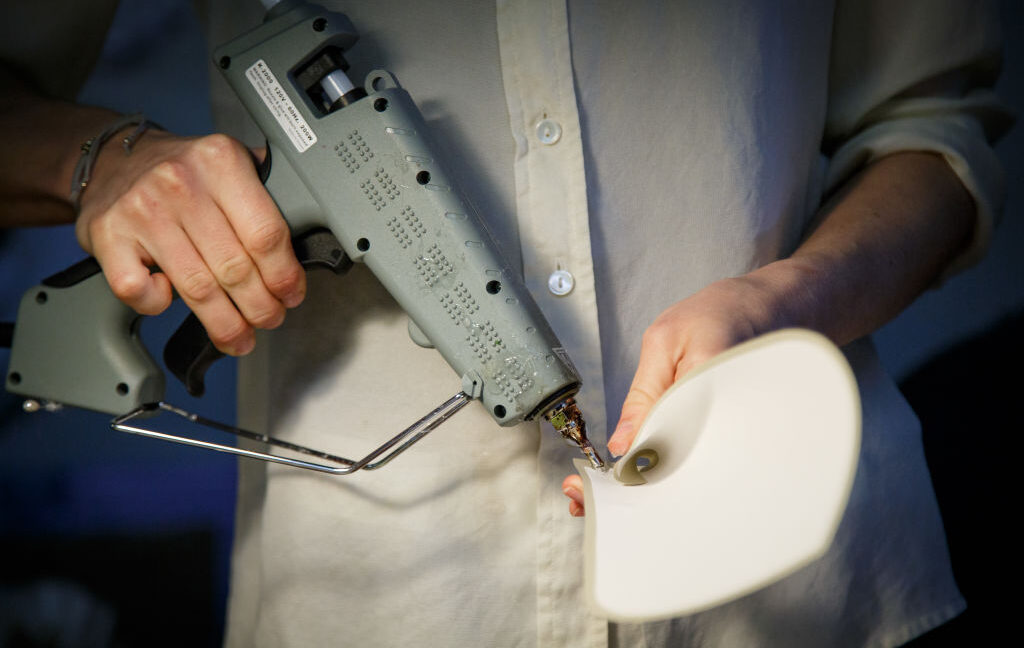
Orthopedic surgery is witnessing a paradigm shift driven by a revolutionary invention by South Korean scientists. A device that the media has already aptly dubbed the “bone repair gun” was born in the innovation laboratories of Sungkyunkwani ülikool.
This handheld instrument, resembling a precision 3D printer, is set to radically change how we approach the treatment of complex bone fractures. By enabling a faster, significantly less expensive, and less invasive healing process than before, this technology has the potential to improve the quality of life of millions of patients with bone injuries worldwide.
Limitations of Traditional Methods
Treating bone fractures has been one of medicine’s oldest challenges. Although casts and splints are effective for simpler fractures, complex, comminuted bone injuries or those involving large defects require more sophisticated solutions.
Problems with Metal Implants
For decades, the standard treatment has involved metal plates, screws, and rods made mainly from titanium alloys. Although they provide the necessary stability, their use is associated with a number of problems:
•Metal implants are inherently foreign bodies
•May cause immune reactions and infections
•Stress concentration in bone can lead to bone thinning
•A second operation is often necessary to remove them
Challenges of 3D Printing
In recent years, 3D printing has offered hope by enabling the creation of implants that precisely match the patient's anatomy. However, this process also remains slow and expensive:
•Requires prior computed tomography scanning of the affected area
•Digital modeling of the implant takes time
•Printing for hours or even days in specialized laboratories
•High costs and complex logistics
What Is the “Bone Repair Gun”?
The Korean scientists' new approach overcomes these obstacles by bringing the creation of a personalized implant directly into the operating room and to the patient's side.
Core Concept of the Device
Essentially, the “bone repair gun” is a high-tech advancement of the familiar hot glue gun. It has been carefully redesigned and adapted for sterile medical use.
The ingenious idea originated with a research team led by Jung Seung Lee, a biomedical engineering researcher at Sungkyunkwan University. Their vision was simple yet ambitious: to eliminate the need for prefabricated implants.
In Situ Approach
This in situ approach makes it possible to create a perfectly fitting scaffold that not only stabilizes the fracture but also acts as a bioactive matrix. It guides and promotes the body's own natural healing processes.
“3D printing has been highlighted as a novel approach to producing such personalized implants, but it, too, requires considerable time and money,” explained Jung Seung Lee. [2]
Technology in Depth: How Does It Work?
The success of this revolutionary technology is based on the perfect synergy between two key elements: the collaboration between a special biomaterial and a device designed for its precise delivery.
Biomaterial: A New Generation of “Cartridges”
The most important and challenging part of the development work was creating a material that would meet a strict set of medical requirements. It had to be:
•Biocompatible
•Mechanically strong
•Biodegradable
•Administered at a temperature close to body temperature
Polycaprolactone (PCL)
The first main component is polycaprolactone, an aliphatic polyester approved by the U.S. Food and Drug Administration (FDA). PCL is known for its excellent biocompatibility.
Its degradation cycle in the body lasts from several months to a couple of years. During this time, it hydrolyzes into safe by-products, which are then eliminated from the body through metabolism.
Hydroxyapatite (HA)
The second component is hydroxyapatite, a calcium phosphate mineral that makes up as much as 70% of the mass of human bone tissue. HA is osteoconductive, meaning that it acts as a scaffold.
New bone cells (osteoblasts) can attach to it, proliferate, and form new bone matrix. Adding it to PCL gives the composite material bioactive properties.
Extrusion Process
The device functions as a miniature extruder. It heats a sterile “cartridge” containing PCL/HA composite material to a precisely controlled temperature, turning it into a flowable paste.
The surgeon can then press the trigger to eject the material through a fine nozzle directly into the fracture or bone defect. Upon contact with the tissue, the material cools rapidly and hardens within a few minutes.
Clinical Studies and Results
Thorough preclinical and clinical studies are required before the technology can be widely adopted.
First Animal Trials
Jung Seung Lee's team conducted a study on rabbits whose femurs had been given critical-sized defects. These are defects that do not heal on their own.
The results were remarkable. Animals treated with the “bone repair gun” showed significantly faster and higher-quality bone healing compared with the control group.
Histological Analyses
Histological analyses confirmed that new, vascularized bone tissue had grown around and into the bioprinted scaffolds. This is a sign of successful regeneration. [2]
Identifying Areas for Improvement
However, there was also room for improvement. One of the main observations was that the degradation of the PCL-based material was somewhat slower than ideal.
In the long term, this may have prevented complete bone remodeling. This is important feedback for further development.
Comparative Analysis by Method
To assess the true value of a new technology, it is important to place it in a broader context and compare it with the alternatives currently in use.
Characteristic
“Bone Repair Gun”
Metal implants
Traditional 3D printing
Personalization
Dynamic, Real-Time
None or limited
High, but slow
Cost
Potentially low
High
Very high
Time Required
Minimal
Long
Very long
Invasiveness
Minimal
Highly invasive
Depends on the case
Biological Integration
Complete
None
Yes
Revision Surgery
None
Common
None
Key Benefits for Patients
Faster Healing
The “bone repair gun” enables significantly faster healing compared to traditional methods. The bioactive material actively stimulates the growth of new bone tissue.
Less Invasive Procedure
The device enables precise placement of material through small incisions. This reduces postoperative pain and shortens recovery time.
Personalized Treatment
Each implant is created precisely according to the shape and size of the patient's injury. This ensures optimal fit and functionality.
Challenges and Future Directions
Despite its enormous potential, the technology is still in the early stages of development and faces several challenges on its path to widespread clinical adoption.
Material Optimization
The main scientific challenge is fine-tuning the material's degradation profile. The ideal scaffold should provide support for exactly as long as needed for the initial healing of the bone.
It should then degrade at a rate that corresponds to the rate of new tissue formation.
Load-Bearing Capacity Testing
Another major challenge is related to load-bearing capacity. Although the trials with rabbits were successful, human body weight and biomechanical loads are significantly greater.
Therefore, studies involving larger animals are essential to prove the safety and effectiveness of the technology. [1]
Regulatory Requirements
Every new medical device and material must undergo rigorous approval processes. This is a time-consuming and costly process that ensures safety and effectiveness.
Surgeon Training
As Lee himself mentioned, the surgeon's skill and training are important factors. Although the device is designed to be user-friendly, creating a precise scaffold structure requires manual dexterity.
Future Innovations
Robotic Surgery Integration
Future visions envisage integrating the device with robotic surgery systems or advanced image recognition and navigation systems. This would help the surgeon create a perfect digital replica of the defect in real time. [2]
Bioactive Additives
Scientists are already actively exploring ways to incorporate various bioactive substances into the biomaterial:
Growth Factors
Proteins that stimulate the growth and differentiation of bone cells, accelerating the healing process.
Antibiotics
They are released slowly to prevent postoperative infections, which are among the main complications in orthopedic surgery.
Anti-inflammatory Agents
Help control postoperative swelling and pain, improving patient comfort.
Impact on the Healthcare System
Cost Reduction
The technology can drastically reduce healthcare costs by eliminating the need for expensive prefabricated implants.
Reducing Hospital Stay
A less invasive procedure and faster healing mean a shorter hospital stay and a quicker return to normal life.
Simplifying Logistics
There is no need to order and store various implants in advance. Everything required is readily available during surgery.
Summary: A New Dawn in Orthopaedic Treatment
The “bone repair gun” developed by South Korean scientists is much more than just a new gadget. It represents a fundamental shift in how we think about treating bone damage.
Paradigm Shift
This is a step away from static, inert implants and toward dynamic, biologically integrated solutions. They work with the body, not against it.
Interdisciplinary Collaboration
The technology, which combines the precision of 3D printing, innovation in materials science, and the principles of regenerative medicine, promises a future in which the treatment of complex bone fractures is faster, cheaper, safer, and significantly more patient-friendly.
Potential Impact
Although the path from the laboratory to the operating room is still long and requires rigorous scientific validation, the potential impact of this technology is undeniable. It could improve the quality of life of millions of people suffering from traumatic injuries, bone cancer, or other bone diseases.
This is an inspiring example of how a bold vision and interdisciplinary collaboration can lead to genuine breakthroughs. They redefine the boundaries of medicine and create hope for better treatment options.
A future where repairing bones is as routine and precise as digital printing may no longer be a distant dream, but a tangible reality.
To provide the best experiences, we use technologies like cookies to store and/or access device information. Consenting to these technologies will allow us to process data such as browsing behavior or unique IDs on this site. Not consenting or withdrawing consent, may adversely affect certain features and functions.
Functional
Always active
The technical storage or access is strictly necessary for the legitimate purpose of enabling the use of a specific service explicitly requested by the subscriber or user, or for the sole purpose of carrying out the transmission of a communication over an electronic communications network.
Preferences
The technical storage or access is necessary for the legitimate purpose of storing preferences that are not requested by the subscriber or user.
Statistics
The technical storage or access that is used exclusively for statistical purposes.The technical storage or access that is used exclusively for anonymous statistical purposes. Without a subpoena, voluntary compliance on the part of your Internet Service Provider, or additional records from a third party, information stored or retrieved for this purpose alone cannot usually be used to identify you.
Marketing
The technical storage or access is required to create user profiles to send advertising, or to track the user on a website or across several websites for similar marketing purposes.