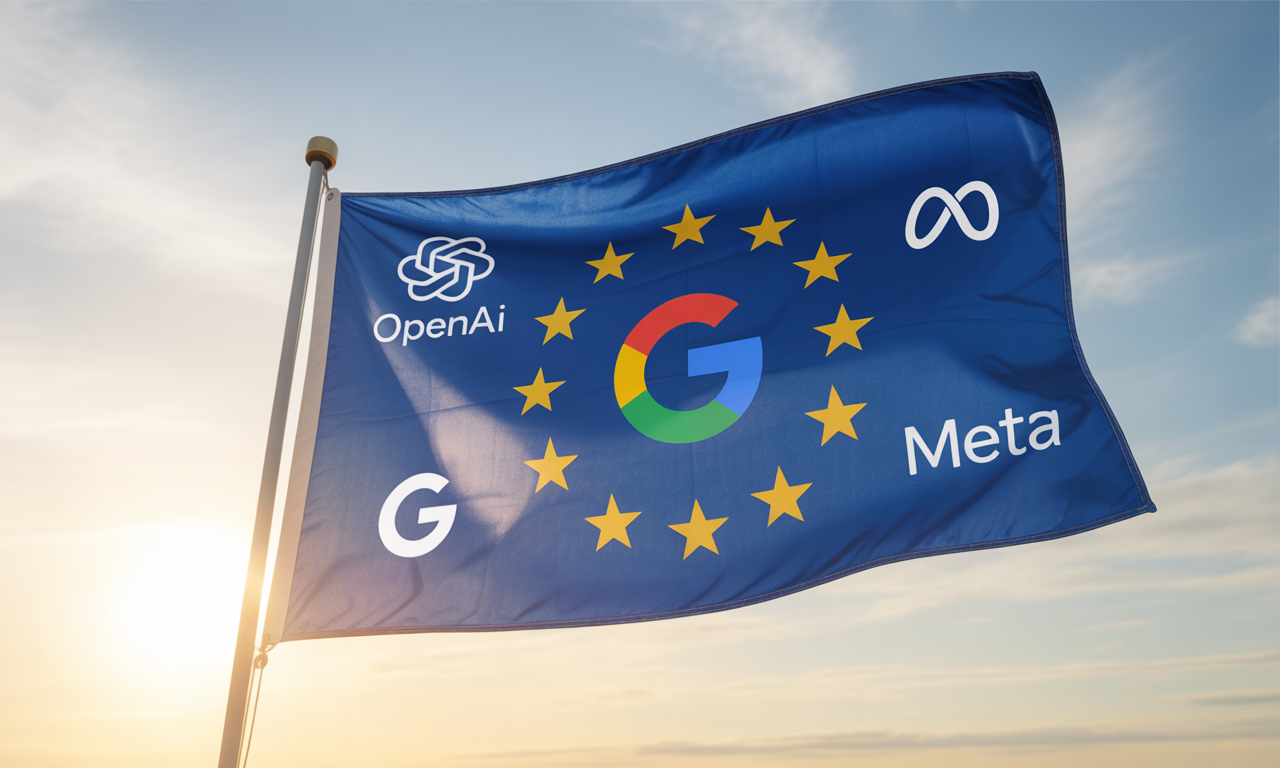
EU throws down the gauntlet to tech giants: new rules for artificial intelligence
11 July 2025
The European Union has taken a decisive step in regulating artificial intelligence by publishing a voluntary set of rules intended to help the world’s largest technology companies comply with the bloc’s new, stringent artificial intelligence laws. Giants such as OpenAI, Google and Meta now face a difficult choice: sign up to these rules or prepare for closer scrutiny by the European Commission.
A new era of AI regulation in Europe
On Thursday, the European Commission published the final version of a voluntary code of practice for companies developing general-purpose artificial intelligence systems. This document is the culmination of nine months of work by thirteen experts and an important part of implementing the EU AI Act, which entered into force in August 2024 [1].
The new rules cover three key areas: transparency that companies must demonstrate to regulators and customers; compliance with EU copyright law; and plans to address the most serious AI risks. Particular attention is being paid to systems such as Grok or ChatGPT, which are raising growing concerns about their potential negative impact.
A dilemma for technology companies
Companies have found themselves in a difficult position. From 2 August, new EU laws require them to document the data used to train their models and mitigate the most serious artificial intelligence risks. They must now decide whether to use the guidelines developed by academic experts under the Commission's supervision to meet these requirements or prepare to convince the Commission that they comply with the requirements in another way.
As Commission spokesperson Thomas Regnier noted, companies that sign the rules will receive “greater legal certainty and a reduced administrative burden”. The French company Mistral was the first to announce on Thursday its intention to sign the agreement.
A victory for transparency
The process of developing the code of practice began in September as a follow-up to the bloc's set of AI rules. Thirteen experts began work, focusing on three areas: transparency that AI companies must demonstrate to regulators and customers using their models; compliance with EU copyright law; and plans to address the most serious AI risks.
The proceedings quickly converged on a few key points of contention. The industry repeatedly stressed that the guidelines should not go beyond the general direction of the AI Act, while activists complained that the rules risk being watered down due to intensive industry lobbying.
In the final text presented on Thursday, Commission experts handed lawmakers a victory by explicitly mentioning “fundamental rights risk” in the list of risks that companies must consider. Laura Lázaro Cabrera of the Center for Democracy and Technology, a human rights group, called it “a positive step forward”.
Public transparency requirements
The issue of public transparency was also resolved: the text states that companies must “publish a summary version” of the reports submitted to regulators before placing the model on the market. This requirement is intended to ensure greater transparency about how artificial intelligence systems work and what security measures are being taken.
Google representative Mathilde Méchin said the company “looks forward to reviewing the code and sharing its views.” However, CCIA, a lobbying group for major technology companies whose members include Meta and Google, was more critical, arguing that the code “still places a disproportionate burden on AI providers.”
Industry criticism
Boniface de Champris, senior policy manager at CCIA Europe, criticised the “overly prescriptive” safety measures and condemned the copyright section for its “new disproportionate measures that go beyond the scope of the law”. He argued that “without significant improvements, signatories will be at a disadvantage compared with non-signatories”.
A challenging regulatory climate
The acrimonious atmosphere surrounding the process of developing EU artificial intelligence regulations and guidelines is likely to affect technology companies' calculations about how to respond. Finnish Member of the European Parliament Aura Salla, a conservative politician and former Meta lobbyist, said before Thursday's announcement: “The process of developing the code has not been well managed so far.”
Over nine months, thirteen experts produced a total of four drafts—a process that attracted the attention of more than 1000 participants and was discussed through several iterations in plenary sessions and four working groups, often in the evenings because some experts were based in the US or Canada.
The future of artificial intelligence regulation
Commission representative Regnier praised the process as “inclusive”, but both industry groups and civil society organisations said they felt unheard. US technology companies, which must now decide whether to sign the code, have also been critical of the EU’s approach to other aspects of its artificial intelligence regulation.
Technology lobbying groups such as CCIA were among the first to call for a halt to parts of the EU AI Act that have not yet been implemented, particularly the obligations on companies using high-risk AI systems, which are due to take effect next year.
Implications for the future of technology
The EU’s decision to regulate artificial intelligence has far-reaching consequences not only for the European market, but also for the global development of technology. Europe’s approach to regulating artificial intelligence could become a model for other regions of the world seeking to balance innovation with the protection of citizens’ rights and ethical considerations.
Companies that choose to sign the voluntary code will benefit from greater legal certainty, but will also assume additional transparency and security obligations. Those that refuse may face stricter oversight and possible sanctions in the future.
Summary
The publication of the voluntary AI code of practice represents a significant moment in relations between the EU and major technology companies. While the bloc seeks to protect its citizens from the potential risks of AI, companies must strike a balance between complying with the new rules and maintaining their competitiveness in the global market.
The decisions that OpenAI, Google, Meta and other giants make in the near future could determine the future of artificial intelligence development in Europe and set a precedent for regulating this critically important technology worldwide.
To provide the best experiences, we use technologies like cookies to store and/or access device information. Consenting to these technologies will allow us to process data such as browsing behavior or unique IDs on this site. Not consenting or withdrawing consent, may adversely affect certain features and functions.
Functional
Always active
The technical storage or access is strictly necessary for the legitimate purpose of enabling the use of a specific service explicitly requested by the subscriber or user, or for the sole purpose of carrying out the transmission of a communication over an electronic communications network.
Preferences
The technical storage or access is necessary for the legitimate purpose of storing preferences that are not requested by the subscriber or user.
Statistics
The technical storage or access that is used exclusively for statistical purposes.The technical storage or access that is used exclusively for anonymous statistical purposes. Without a subpoena, voluntary compliance on the part of your Internet Service Provider, or additional records from a third party, information stored or retrieved for this purpose alone cannot usually be used to identify you.
Marketing
The technical storage or access is required to create user profiles to send advertising, or to track the user on a website or across several websites for similar marketing purposes.