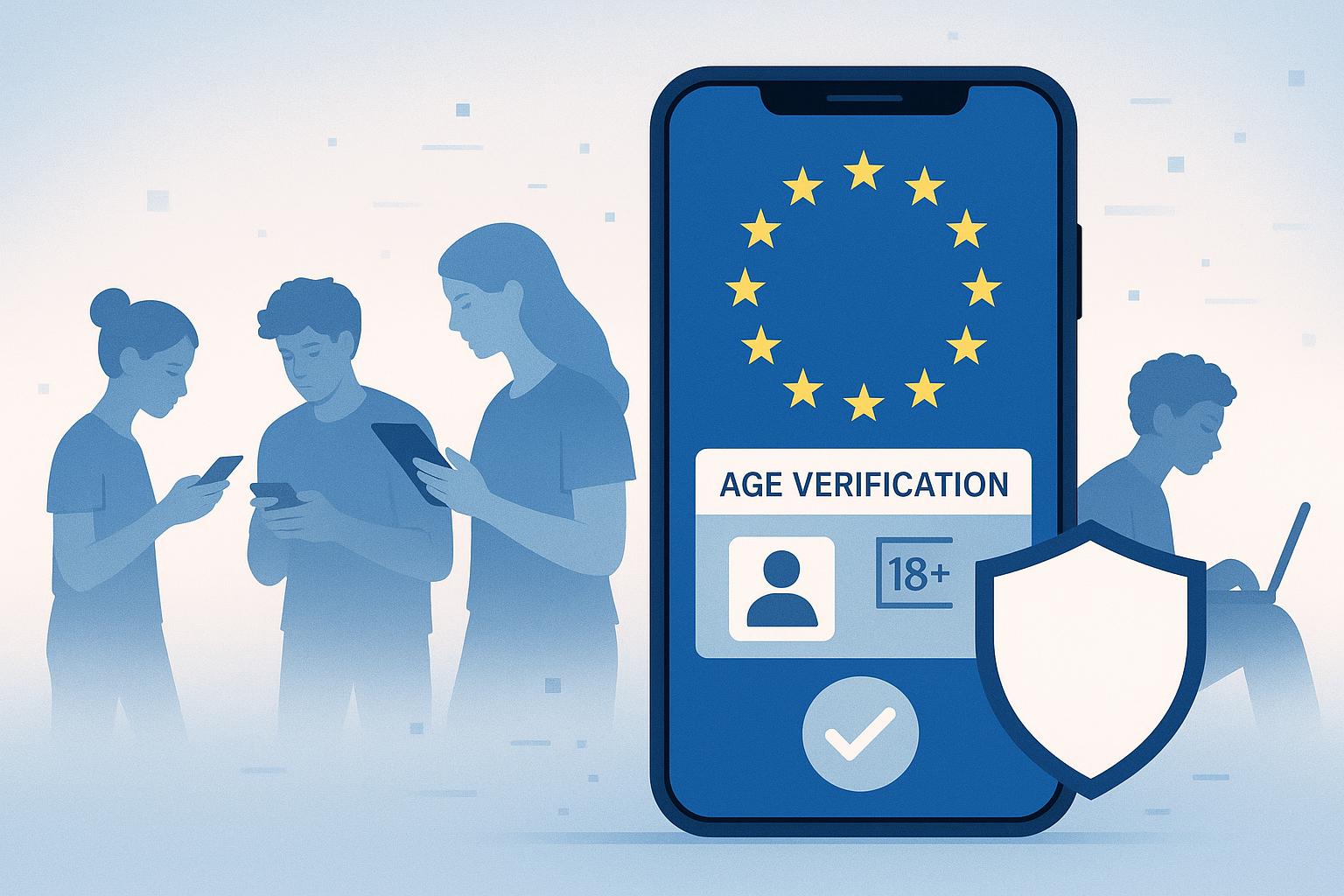
EU Call: Age Verification on Social Media – How to Protect Children in the Digital Age?
23 October 2025
A recent policy dialogue organised by Euroopa Poliitikakeskus (European Policy Centre) once again sharply highlighted the need to establish strict age verification requirements for social media platforms in the European Union. This is part of a broader debate on how to protect children and adolescents online while preserving the freedom and innovation of the digital space. The issue of protecting minors online is becoming increasingly relevant, and the European Union is seeking to establish common standards that would apply to all platforms operating in the European market. This article delves into the topic, analysing the nature of the problem, the proposed solutions, technological challenges and political disagreements associated with this complex issue.
The Depth of the Problem: Why Is Age Verification Inevitable?
Digitaalne maailm pakub noortele enneolematuid võimalusi õppimiseks, suhtlemiseks ja eneseväljenduseks. Kuid sellega kaasnevad ka tõsised ohud. Euroopa Komisjoni 2025. aasta suuniste kohaselt kasutab 97% Euroopa Liidu noortest internetti iga päev, peamiselt sotsiaalvõrgustike jaoks, kuid nad on endiselt ebapiisavalt kaitstud. Hiljutised andmed näitavad laste seksuaalse kuritarvitamise ulatust kontinendil, mida on kirjeldatud kui pandeemiat. See on loonud pakilise vajaduse reguleerida tehnoloogilisi rakendusi vanusekontrolli abil, et probleemi ohjeldada.
A 2024 study by Maailma Terviseorganisatsioon (WHO) found that more than one in ten adolescents (11%) showed signs of problematic social media behaviour and experienced negative consequences. Girls reported problematic social media use more frequently than boys (13% vs 9%). Problematic use is defined as a pattern of behaviour characterised by addiction-like symptoms, including an inability to control social media use, withdrawal symptoms, neglect of other activities in favour of social media, and negative consequences in everyday life due to excessive use.
Euroopa Komisjoni president Ursula von der Leyen rõhutas 24. septembril 2025 toimunud kõrgetasemelisel üritusel “Laste kaitse digiajastul”, et lapsed seisavad silmitsi tõsiste ohtudega internetis, sealhulgas kokkupuude sõltuvust tekitavate algoritmide, täiskasvanutele mõeldud sisu, küberkiusamise ja enesevigastamise propageerimisega. Ta rõhutas, et “vanemad, mitte algoritmid, peaksid lapsi kasvatama”, kutsudes üles andma peredele rohkem õigusi, kaitstes samal ajal alaealisi ekspluateerivate tehnoloogiapraktikate eest.
The European Union's Proposed Solutions: Stronger Protection and Stricter Rules
The European Parliament's Committee on the Internal Market and Consumer Protection (IMCO) has taken a firm stance on protecting minors online. The report adopted on 16 October 2025 expresses concern over the inability of large online platforms to adequately protect minors and warns of the risks of addiction, mental health problems, and exposure to illegal and harmful content.
Age Restrictions and Parental Consent
The report proposes introducing an EU-wide digital age of majority of 16 for access to social media, video-sharing platforms, and AI companions, except where parental consent has been given. It also proposes setting a minimum age of 13 for access to any social media. These measures are intended to ensure that younger children are not exposed to content that is unsuitable for their age.
Võitlus Kahjulike Praktikatega
Komisjon on kutsutud üles kasutama täielikult ära oma volitusi vastavalt digiteenuste õigusaktile (DSA), sealhulgas määrama trahve või viimase abinõuna keelama nõuetele mittevastavad saidid või rakendused, mis ohustavad alaealisi. Lisaks nõutakse järgmisi meetmeid:
•Personal liability: Consider introducing personal liability for senior executives in cases of serious and persistent violations of provisions concerning the protection of minors, particularly in relation to age verification.
•Regulation of algorithms: Ban engagement-based recommendation algorithms aimed at minors and prohibit the most addictive design features by default.
•Gambling-like mechanisms: Ban gambling-like mechanisms, such as “loot boxes”, in games accessible to minors.
•Regulation of child influencers: Prohibit platforms from monetizing child influencers or offering them financial or material incentives (kidfluencing).
•Challenges of artificial intelligence: Address the ethical and legal challenges posed by AI-based nudity apps that allow users to create manipulated images of individuals without their consent.
•Manipulative chatbots: Strictly enforce the rules of the AI Act against manipulative and deceptive chatbots.
Rapporteur Christel Schaldemose (S&D, Denmark) said: “Our report clearly sets out the need to increase the protection of minors online in two areas. First, we need a higher bar for access to social media, which is why we propose setting an age limit of 16 across the EU. Second, we need stronger safeguards for minors who use online services. My report calls for mandatory safety by design and a ban on the engagement mechanisms most harmful to minors.”
Technology Behind the Scenes: How Would Age Verification Work in Practice?
The European Commission has released the second version of its digital age verification blueprint, which is part of an EU-wide harmonized approach to age verification when using digital services. This updated blueprint includes features such as user registration using passports and ID cards and supports the Digital Credentials API.
Digital Wallet and Privacy
The blueprint, also known as the “mini-wallet,” is technically aligned with the forthcoming European Digital Identity Wallets, which are expected to be ready by the end of 2026, ensuring future compatibility and integration capabilities. Digital identity wallets are secure mobile applications that allow EU citizens, residents, and businesses to manage their digital identity and credentials in one place. These wallets allow users to prove their identity, age, qualifications, or other attributes both online and offline while retaining full control over the information shared. The wallets support selective disclosure, meaning that users can share only the necessary information without revealing excessive personal data.
Pilot Projects and Challenges
1.five EU Member States will test the solution's prototype during the year: Denmark, France, Greece, Italy and Spain. Users in these countries will be able to activate age verification by integrating a compatible age verification function into their national digital wallets or by preparing a customised national age verification app for publication in app stores. This will allow them to prove that they are over 18 (or meet another age limit) without disclosing personal data to the online services they visit.
However, this raises concerns in countries such as Greece, where low adoption is feared due to complexity, gaps in citizens' digital literacy, and concerns about the excessive centralisation of identity data, which could increase the risk of data breaches or surveillance.
Political Divisions: Three Major Rifts in the European Union
Kuigi ELi liidrid on laialdaselt ühel meelel vajaduses kaitsta lapsi internetis, on liikmesriikide vahel märkimisväärseid erimeelsusi selle kohta, kuidas seda kõige paremini teha. Politico analüüs [3] toob esile kolm peamist lõhet:
1. Keelata või Mitte Keelata?
EU countries are deeply divided between supporters of a complete ban – which has been backed by French President Emmanuel Macron – and those calling for parental consent. France, Slovakia and Norway favour clear age restrictions, while Greece, the Netherlands and Spain believe that parents are responsible for guiding their children, with the state providing guidelines.
2. Who Decides – Brussels or the Capitals?
Most EU countries want the freedom to set their own age limits to account for cultural differences. Germany, Denmark and Greece are firmly in this camp. Latvia has proposed a “hybrid approach”, with a minimum level set at the European level and countries able to choose a lower age limit if they wish. This resembles the GDPR approach, under which the default age for consenting to data processing is 16, but countries can lower it to 13.
3. What Is the Right Age?
There is heated debate over what the minimum age should be, with 15 and 16 as the main options. Denmark, France and Greece support an age limit of 15, while Spain and Slovakia have backed an age limit of 16. Australia, one of the few countries in the world to have implemented such measures, has also set the minimum age at 16.
Estonia's Position
Estonia and Belgium are the two countries that did not sign the widely supported declaration. Estonia believes in enforcing existing rules, such as the GDPR, rather than imposing new restrictions, and in investing in education. Estonia’s Minister of Justice and Digital Affairs Liisa-Ly Pakosta has said: “Estonia believes in the information society and in including young people in the information society.” This reflects Estonia’s broader digital philosophy, which emphasizes education and digital literacy rather than strict restrictions.
Conclusion: The Road Ahead
The European Union's call to introduce age verification on social media platforms is an important step in protecting children in the digital world. Although there is broad consensus on the seriousness of the problem, there is still considerable disagreement over the solutions. Discussions continue on whether to impose a complete ban or rely on parental consent, who should set the rules, and what the appropriate age limit should be. Estonia's position, which emphasises education and the enforcement of existing rules, offers an alternative perspective to stricter restrictions.
In the future, it will be important to find a balance between protecting children, parents' rights, and digital innovation. The European Union faces the difficult task of creating a unified and effective framework that takes into account the cultural differences and technological capabilities of Member States. Ultimately, children's safety online depends on technological solutions and legislation as well as education and parental guidance.
To provide the best experiences, we use technologies like cookies to store and/or access device information. Consenting to these technologies will allow us to process data such as browsing behavior or unique IDs on this site. Not consenting or withdrawing consent, may adversely affect certain features and functions.
Functional
Always active
The technical storage or access is strictly necessary for the legitimate purpose of enabling the use of a specific service explicitly requested by the subscriber or user, or for the sole purpose of carrying out the transmission of a communication over an electronic communications network.
Preferences
The technical storage or access is necessary for the legitimate purpose of storing preferences that are not requested by the subscriber or user.
Statistics
The technical storage or access that is used exclusively for statistical purposes.The technical storage or access that is used exclusively for anonymous statistical purposes. Without a subpoena, voluntary compliance on the part of your Internet Service Provider, or additional records from a third party, information stored or retrieved for this purpose alone cannot usually be used to identify you.
Marketing
The technical storage or access is required to create user profiles to send advertising, or to track the user on a website or across several websites for similar marketing purposes.