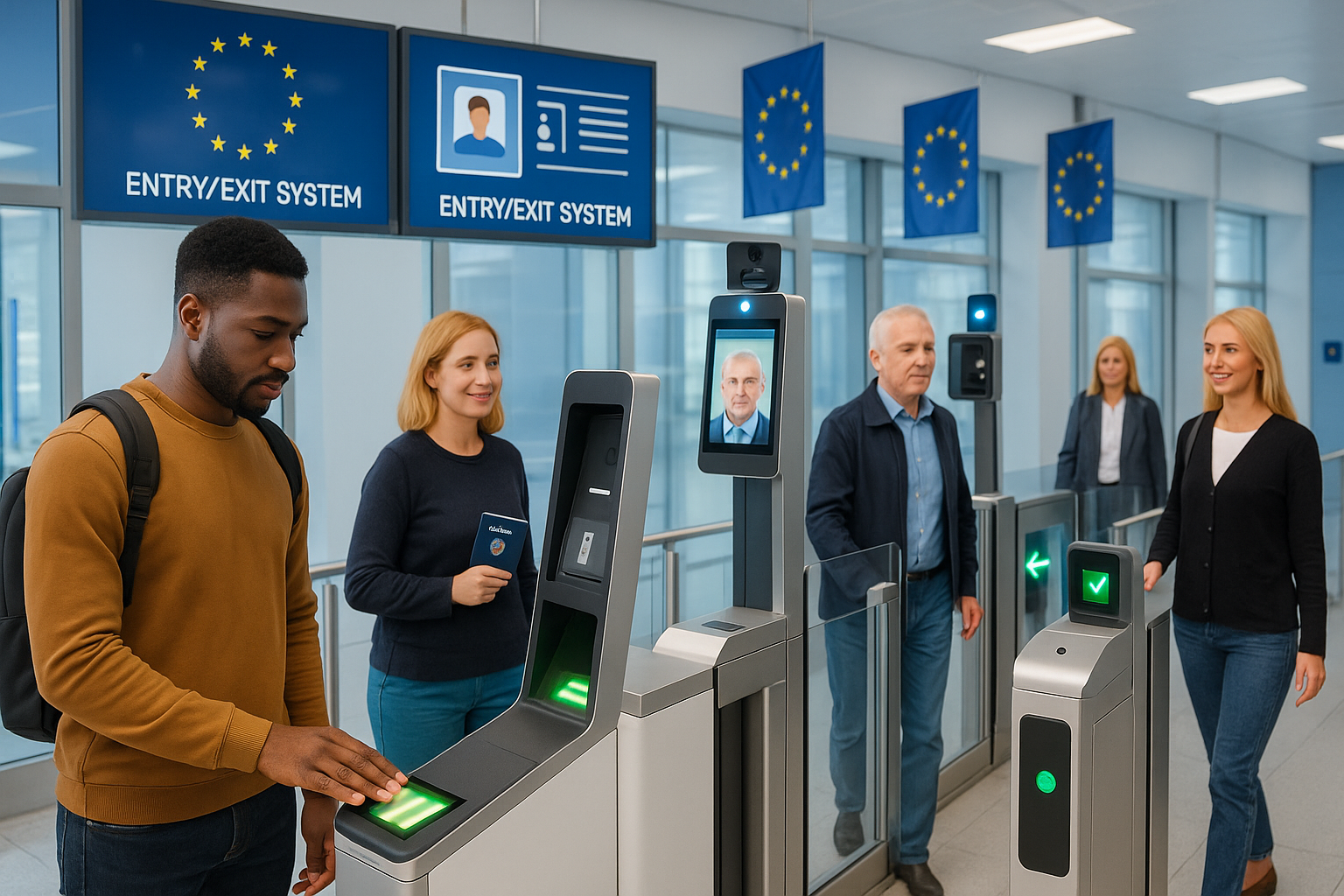
The European Union's New Era of Border Control: What Does a Traveler Arriving in Estonia Need to Know?
Published: 6 October 2025
Starting on 12 October 2025, a new automated border control system known as the Entry/Exit System (EES) will be implemented in Estonia and throughout the European Union. This is a significant step forward in managing the external borders of the Schengen area, bringing important changes for third-country nationals. In this article, we provide a comprehensive overview of what this new system entails, who it affects, and how it will change travel to Estonia and other European countries.
Introduction: The Future of Border Control Has Arrived
We live in an era in which technology is developing at a tremendous pace, transforming our daily lives and habits. This development has also extended to the management of national borders. Faced with growing migration flows, security threats and the need to modernise border procedures, the European Union has developed a new-generation IT solution—the Entry/Exit System (EES). It is part of the broader “Smart Borders” package, which aims to make travel to the Schengen Area smoother, safer and more efficient.
From 12 October 2025, this digital system will replace the current time-consuming and somewhat inaccurate manual stamping of passports. This is the biggest change in the management of the Schengen Area's borders since its creation. As a country on the external border of the European Union, Estonia is at the forefront of this upgrade, implementing the system at all of its border crossing points—at land borders, seaports, and airports. This means that every traveller who is not a citizen of the European Union and arrives in Estonia for a short-term visit will encounter the new system. But what does this mean in practice?
What Is the Entry/Exit System (EES)?
In short, EES (in English, Entry/Exit System) is a comprehensive electronic system designed to automatically register the entry and exit of third-country nationals (i.e. persons who are not citizens of the EU, the European Economic Area, or Switzerland) into and out of the Schengen Area. The system covers 29 European countries, and its main purpose is to improve the quality and speed of border control and provide a systematic overview of who enters the Schengen Area and when they leave it.
At the heart of the system is a central database where travellers' data is collected. This replaces the current practice of border guards stamping passports manually. Manual stamping is not only time-consuming but also unreliable in identifying overstayers and does not provide sufficient protection against document fraud. The EES addresses these issues by creating a digital and secure record of every border crossing.
Main Objectives of the EES:
1.More effective border management: Automation speeds up the border control process for bona fide travellers.
2.Enhanced security: The system helps to better prevent and detect illegal immigration and combat terrorism and serious crime.
3.Monitoring the duration of stay: The EES automatically calculates each traveller's permitted duration of stay and notifies border control authorities if someone has exceeded it.
4.Fraud prevention: The use of biometric data helps to identify more effectively individuals who use forged documents or multiple identities.
How Does the EES Work in Practice? Biometrics and Data Collection
The most noticeable change for travellers under the new system is the collection of biometric data. The first time a third-country national crosses the external border of the Schengen Area after the system becomes operational, the following data will be collected from them:
•Facial image: A digital photo is taken.
•Fingerprints: Prints from four fingers are scanned.
These biometric data are linked to the traveller's personal data read from the biometric passport. In addition, the following information is also stored in the system:
•Personal data: Full name, date of birth, nationality.
•Border crossing information: Date and time of entry and exit, and the location of the border crossing point.
•Entry bans: The system will also include information about persons who have been issued an entry ban.
For subsequent border crossings, the process is faster. The system compares the traveler's biometric data with the data in the database to verify their identity. The data is stored in the EES central system for three years. This period is extended if the traveler visits the Schengen Area again. Data older than three years that is not related to any pending case is automatically deleted.
Who Is Affected by the New System?
It is important to emphasize that The EES does not apply to citizens of the European Union, the European Economic Area countries (Iceland, Liechtenstein, Norway), or Switzerland. Nor does this apply to persons who have a right of residence as a family member of an EU citizen and who are travelling together with the EU citizen.
The system is intended for for all other third-country nationals, who travel to the Schengen Area for a short-term stay (up to 90 days within a 180-day period). This includes both visa-exempt nationals (for example, citizens of the USA, Canada, the United Kingdom and Ukraine) and those who require a Schengen visa.
Therefore, if you are a tourist, business traveller, or someone visiting relatives or friends from a third country, you will certainly encounter the new system.
Implementation in Estonia: What to Expect at Border Crossing Points?
Estonia is one of the countries implementing the EES in full and simultaneously at all of its external border crossing points from 12 October. This includes:
•Eastern border road crossing points: Narva, Luhamaa and Koidula.
•Ports: Port of Tallinn's Old City Harbour.
•Airports: Tallinn Airport.
Representatives of Politsei- ja Piirivalveamet (PPA) have emphasized that launching the new system has been an extensive and complex project. As with any major system change, disruptions and longer waiting times may occur during the first weeks and months of the EES.
“In Estonia, the system will be implemented at all border crossing points simultaneously. This means that during the first few weeks, queues at border crossings may be longer than usual, but this is a natural part of launching such a major system change,” explained Katre Vahtra, Head of Business Services at Siseministeeriumi infotehnoloogia- ja arenduskeskus (SMIT).
As the collection of biometric data is an additional procedure that takes time, travellers are strongly advised to allow more time than usual for crossing the border. This applies particularly to Tallinn Airport and the port, where passenger volumes are the highest. Travellers are advised to arrive at the airport or port with sufficient time to spare so that all necessary procedures can be completed without additional stress.
To enhance passenger convenience, Tallinn Airport has also installed automated border control gates (ABC gates). PPA urges all European Union and Swiss citizens who are at least 12 years old and hold a biometric passport to use these gates to reduce the burden on regular border control desks.
Benefits of the New System and Its Impact on Travellers
Although the new system may initially seem cumbersome and time-consuming, in the longer term it also offers several benefits for bona fide travellers.
PPA piirihaldusbüroo project manager Marko Voog has said: “The new system also makes it easier for bona fide third-country nationals to travel while more effectively detecting cases of document and identity fraud. In addition, the system enables wider use of automated border checks and self-service systems, which are faster and more convenient for travellers.”
Benefits of the EES for Travellers:
•Faster process on repeat trips: After the initial registration, subsequent border crossings will be faster.
•Self-service options: At many border crossing points, including Tallinn Airport, travellers can use self-service kiosks to pre-register their data, which speeds up the process with the border guard.
•The end of passport stamping: You no longer need to worry about running out of passport pages or confusing stamps.
•Clarity on the length of stay: Travellers can check how much time they have left to stay in the Schengen area, helping them avoid unintentional violations.
Data Protection and Privacy: Is There Cause for Concern?
Extensive data collection always raises questions about privacy and data protection. The European Union has paid close attention to this aspect. Data processing under the EES is strictly regulated and complies with the requirements of the EU General Data Protection Regulation (GDPR).
Only authorised authorities that need EES data to perform their direct duties have access to it. In Estonia, these authorities are Politsei- ja Piirivalveamet, Maksu- ja Tolliamet, Välisministeerium and Kaitsepolitseiamet. The data is used only for purposes provided for by law, such as border control, preventing illegal migration, and combating terrorism and serious crime.
Every traveller has the right to access their data, request the correction of inaccurate data, and request the deletion of unlawfully processed data. To do so, they must contact the data protection authority of the relevant country.
Summary: Prepare for the New Reality
The new Entry/Exit System is undoubtedly the biggest reform of European Union border management in recent decades. It is a step towards a safer and more digital future. Although the transition period may cause some inconvenience and longer waiting times, the system's long-term goals – greater security, more effective border control and smoother travel – are undoubtedly necessary.
All third-country nationals planning to travel to Estonia or other Schengen Area countries after 12 October 2025 should be aware of the changes and allow sufficient time for crossing the border. Keep your travel documents in order, be prepared to provide biometric data, and follow the instructions of border guards. This will help you contribute to smooth and secure border crossings in the new digital era.
Practical Guide: How to Prepare for the EES System?
To pass through the new system successfully, it is important to know what to expect and how to prepare. Below, we provide practical recommendations to help you pass through the new border control smoothly.
Before Travelling:
Check your travel documents: Make sure your passport is valid for at least three months after your planned departure from the Schengen area. A biometric passport is preferable, as it allows you to use automated systems.
Allow extra time: Border checks may take longer than usual, especially the first time after the system comes into operation. We recommend allowing at least 30-60 minutes of extra time, particularly at major border crossing points such as Tallinn Airport.
Prepare to provide biometric data: Remove gloves from your hands and clean your fingers to ensure high-quality fingerprint scanning. Also remove your glasses and hat for the photo.
At the border crossing point:
Follow the instructions: Border guards provide clear instructions for providing biometric data. Be patient and follow them carefully.
Use self-service options: If you have previously registered in the system, you can use automated kiosks for preliminary data checks.
Keep your documents: Keep all travel documents accessible and in good condition.
Future Prospects: What Comes After the EES?
EES is only the first step in implementing the European Union’s “Smart Borders” package. The next major change is the European Travel Information and Authorisation System (ETIAS), which is expected to enter into force in 2026. ETIAS requires visa-exempt third-country nationals to register electronically before arriving in the Schengen Area.
Together, EES and ETIAS form a comprehensive system that gives the European Union a complete overview of everyone entering and leaving the Schengen Area. This is an important step in ensuring security and preventing illegal migration.
Summary: A New Era at Europe's Borders
1.October 2025 marks the beginning of a new era in European Union border management. The EES will bring significant changes that affect millions of travellers every year. Although the transition period may be challenging, the system’s long-term benefits—greater security, more efficient checks and, ultimately, smoother travel—are worth it.
Estonia, as a country on the external border of the European Union, plays an important role in this process. Our country's readiness to implement the system fully at all border crossing points demonstrates its commitment to upholding Europe's shared values and ensuring security.
It is important for all travellers planning to visit Estonia or other countries in the Schengen Area to be aware of and prepare for the changes. Only then can we ensure that the new system fulfils its purpose – to make travel safer and smoother for everyone.
To provide the best experiences, we use technologies like cookies to store and/or access device information. Consenting to these technologies will allow us to process data such as browsing behavior or unique IDs on this site. Not consenting or withdrawing consent, may adversely affect certain features and functions.
Functional
Always active
The technical storage or access is strictly necessary for the legitimate purpose of enabling the use of a specific service explicitly requested by the subscriber or user, or for the sole purpose of carrying out the transmission of a communication over an electronic communications network.
Preferences
The technical storage or access is necessary for the legitimate purpose of storing preferences that are not requested by the subscriber or user.
Statistics
The technical storage or access that is used exclusively for statistical purposes.The technical storage or access that is used exclusively for anonymous statistical purposes. Without a subpoena, voluntary compliance on the part of your Internet Service Provider, or additional records from a third party, information stored or retrieved for this purpose alone cannot usually be used to identify you.
Marketing
The technical storage or access is required to create user profiles to send advertising, or to track the user on a website or across several websites for similar marketing purposes.