
← BACK
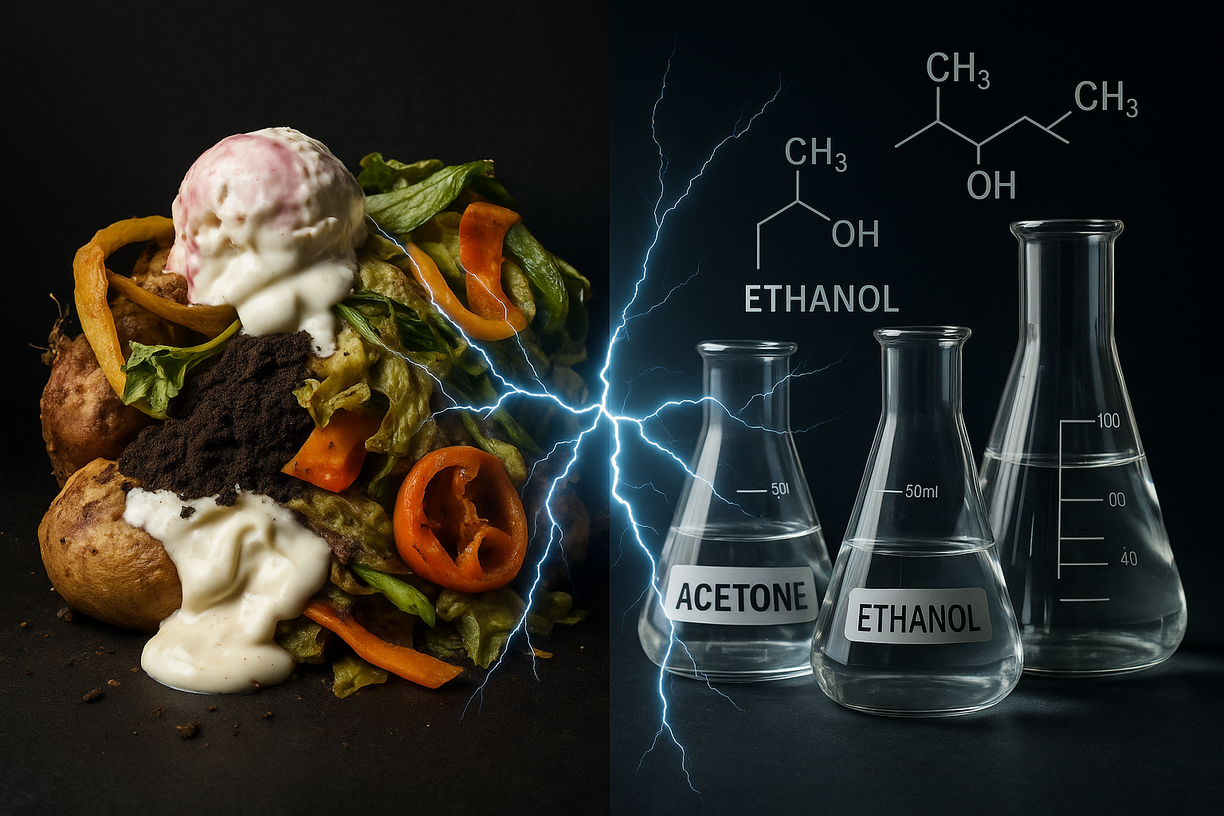
REVOLUTION: Electricity turns rotting food into valuable chemicals!
17.09.2025
The world is on the brink of a revolution in waste treatment. Researchers at Ohio State University have developed a groundbreaking method that uses electricity to convert decomposing food waste into valuable chemicals such as acetone, ethanol, and butanol. This discovery not only offers a solution to the global food waste problem but also paves the way for the creation of a new, sustainable industry based on the principles of the circular economy. This technology, known as electrochemical processing of food waste, promises significantly greater efficiency and cost-effectiveness compared with traditional fermentation methods, making it a potential game changer in the chemical industry and waste management. While the average family of four loses about 1500 dollars a year due to discarded food, this discovery could turn those losses into profit by creating value from what we are used to considering waste.
The global food waste problem: trillions of dollars in the trash
Toidujäätmete probleem on saavutanud vapustavad mõõtmed. Ühinenud Rahvaste Organisatsiooni (ÜRO) andmetel visatakse maailmas igal aastal ära umbes 1,3 miljardit tonni toitu, mis moodustab ligikaudu kolmandiku kogu inimtoiduks toodetavast toidust. See ei ole mitte ainult moraalne ja eetiline probleem, vaid ka tõsine majanduslik ja keskkonnakriis. Toidujäätmetest tulenevad rahalised kaotused ulatuvad triljonitesse dollaritesse aastas ning nende mõju keskkonnale on võrreldav tervete riikide kasvuhoonegaaside heitkogustega. Prügilates lagunevad toidujäätmed eraldavad metaani – võimsat kasvuhoonegaasi, mis on kliimale 25 korda kahjulikum kui süsinikdioksiid. Hinnanguliselt tekitavad toidujäätmed 8–10% kõigist ülemaailmsetest kasvuhoonegaaside heitkogustest, mis teeb neist USA ja Hiina järel suuruselt kolmanda heiteallika.
For ordinary consumers, these figures also have a direct financial impact. According to the USA Environmental Protection Agency (EPA) 2025 April report, the average American consumer throws away food worth 728 dollars every year. For a family of four, this amount rises to 2913 dollars a year, which accounts for about 11% of their total food expenses. These figures underscore the need to find effective solutions to reduce and recycle food waste. Older statistics, based on data from 2010, estimated a family's losses at 1500 dollars a year, but food prices have risen significantly since then, making the problem even more acute.
Electrofermentation: A ‘charged’ solution to the problem
Against the backdrop of this global problem, a study by researchers at Ohio State University appears particularly promising. Their method, known as electrofermentation or for the electrochemical treatment of food waste, represents a significant advance over traditional biological treatment methods. Instead of simply relying on microorganisms to break down organic material, the researchers added an electrical impulse to the process.
“We are creating one industry from the waste of another,” says Beenish Saba, the study's lead author and a researcher in food, agricultural and biological engineering at Ohio State University. “We are using waste that a contractor charges companies to take to a landfill, where it produces methane. We suggest that companies could install a simple bioreactor in which they could produce other important by-products.”
During experiments whose results were published in the prestigious scientific journal Journal of Environmental Chemical Engineering, the team used residues from ice cream and sour cream production due to their high organic content. They compared the results of conventional fermentation, which takes place at a higher temperature (about 37 °C), with electrofermentation conducted at room temperature in a bioreactor equipped with a special electrode.
The results were astonishing. Applying a minimal electrical voltage not only accelerated the bacteria's metabolism, forcing them to “eat” the waste faster and more efficiently, but also significantly increased the yield of valuable chemicals. In particular, the production of two Clostridium’s family of bacteria (C. beijerinckii and C. carboxidivorans) when using this combination, the butanol yield is lower at lower pressures 12 times. In addition, this synergistic microbial tandem made it possible to solve another problem: one bacterial species consumed the carbon dioxide released by the other and produced hydrogen—another valuable product—in the process.
From waste to wealth: Economic and environmental benefits
Electrochemical processing of food waste The potential benefits of implementing this technology are enormous and multifaceted. Firstly, it involves the creation of a new economic model in which waste is transformed into a valuable raw material. Platform chemicals, such as acetone, ethanol and butanol, are the building blocks for the production of thousands of products, including plastics, solvents, fuels and much more. Historically, these have been derived from fossil fuels such as oil and gas, which are associated with significant environmental pollution and greenhouse gas emissions. Shifting the production of these chemicals to food waste will not only reduce our dependence on fossil resources, but will also significantly reduce the chemical industry’s carbon footprint.
Secondly, it directly reduces the volume of waste sent to landfill. This, in turn, leads to a reduction in emissions of methane – one of the most dangerous greenhouse gases. The reduction in air pollution in areas surrounding landfill sites and oil refineries is an added bonus for public health.
Thirdly, there is the potential to reduce pressure on food prices. By reducing losses in the supply chain and creating added value from waste, it is possible to stabilize and even lower product prices for end consumers. Thus, money that is literally thrown in the trash today can be reinvested in the economy, creating new jobs and promoting sustainable development.
Researchers in Ohio are already expanding their experiments to include other types of waste, such as coffee grounds and lake algae, which points to the technology’s broad potential for application. If further research and upscaling prove successful, we may well see food waste from our dining tables feeding not landfill sites, but entire industries, making our world cleaner and our economy more sustainable.
This innovative approach, called electrofermentation, has shown impressive results, increasing butanol production by up to 12 times, for example. The discovery comes at a time when the world is desperately seeking solutions to climate change and resource waste, offering hope for a greener and more sustainable future.